Clean is a choice you make every morning.
Men's Body Wash: What You Put On Your Body Every Morning Is Either a Ritual or a Habit
12 min read
2026-04-05
In This Article
What Actually Makes a Mens Body Wash Worth Using?
Body Wash vs. Bar Soap: Which One Is Actually Better?
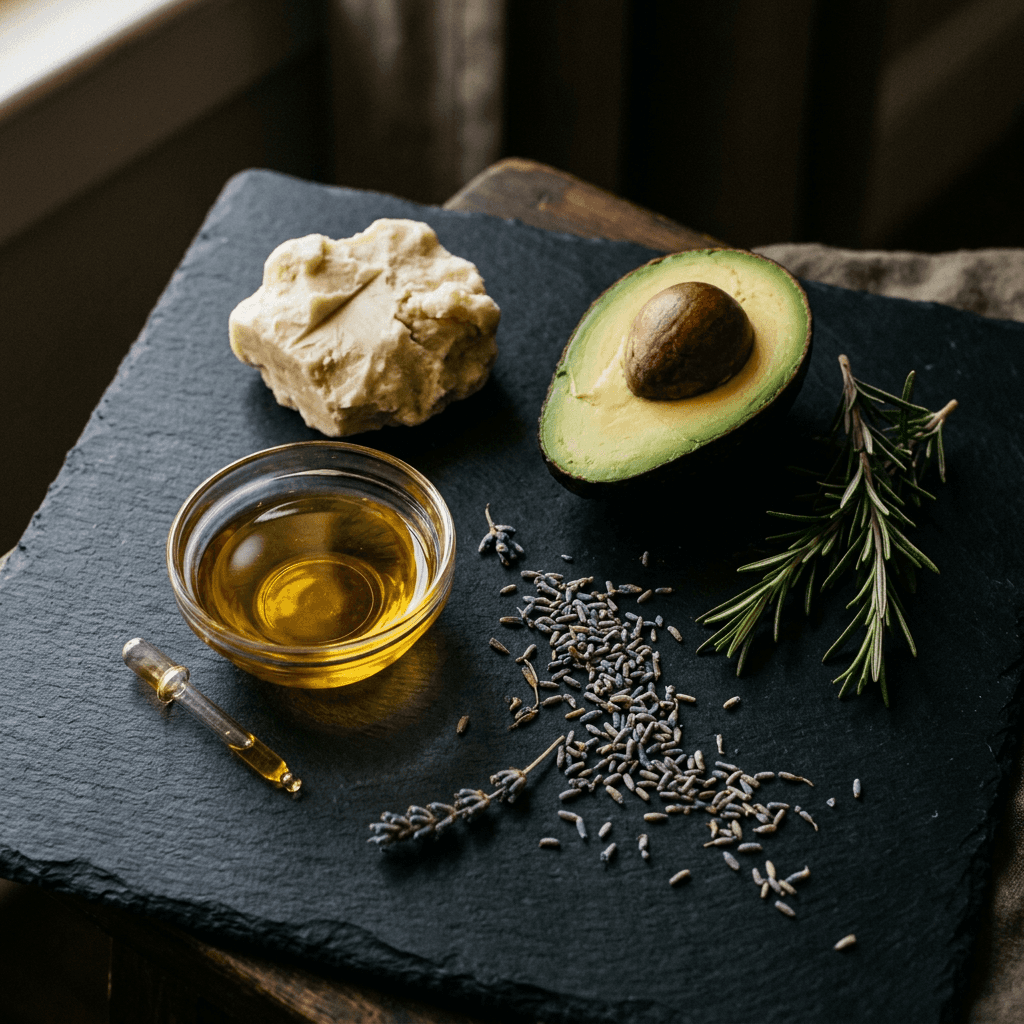
What Goes Into a Quality Formula: 9 Ingredients Worth Looking For
7 Red-Flag Ingredients That Belong Nowhere Near Your Skin
How Does Your Skin Type Change What You Should Buy?
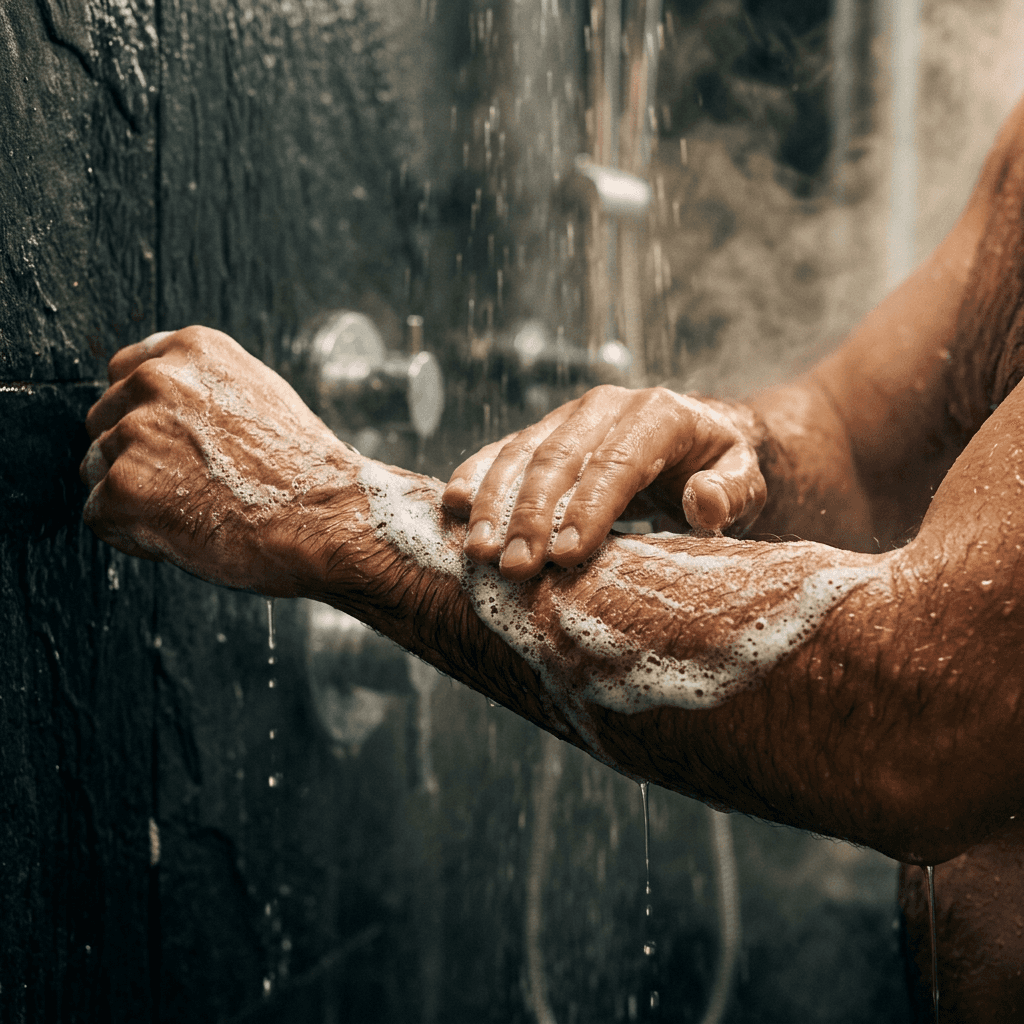
How to Use Body Wash Properly (Most Men Get This Wrong)
Clean, Organic, Natural: What Do These Labels Actually Mean?
HOMME The Wash Up: What a Clean Morning Looks Like
Frequently Asked Questions
Related Reading
The Standard
Men's Body Wash: What You Put On Your Body Every Morning Is Either a Ritual or a Habit
What you put on your body every morning is either a ritual or a habit. The difference is the man.
Most men don't think about their mens body wash. They grab whatever's in the shower. Same bottle they've had for six months. Smells like fake pine. Probably full of things they can't pronounce. That's a habit. And habits keep you average.
This guide is for the man who wants more than clean. It's for the man who's decided his standards apply to everything — including what goes on his skin before he walks out the door.
Key Takeaways
Most mens body washes contain sulfates that strip your skin barrier — the research confirms it.
Healthy skin sits at pH 4.5-5.5. Most drugstore soaps run pH 9-10. That gap costs you.
The U.S. men's grooming market hit $7.1 billion in 2025 (NielsenIQ) — and the fastest-growing segment is men who actually read labels.
Your skin type should drive your formula choice. Not the packaging. Not the smell.
Clean, organic, and natural are three different things. Two of them are regulated. One is a marketing word.
What Actually Makes a Mens Body Wash Worth Using?
Most body washes are surfactant, water, fragrance, and a cheap preservative system. That's it. The men's personal care market is projected to reach $67.2 billion by 2030 at a 9.1% CAGR (Grand View Research). With that kind of money moving, there's no excuse for a bad formula. There's just a lot of noise.
A good mens body wash does three things. It cleans without stripping. It leaves the skin barrier intact. It smells like something a man actually wants to wear.
That's not complicated. But most brands get it wrong.
The skin barrier is your first line of defense. Strip it and you get tightness, dryness, and reactive skin. Do it every day and your skin starts working against you.
Citation Capsule: The global men's personal care market was valued at $30.8 billion in 2021 and is projected to reach $67.2 billion by 2030 at a 9.1% CAGR, with grooming sub-categories growing at 11.0% — the fastest segment in the space (Grand View Research, 2022).
Body Wash vs. Bar Soap: Which One Is Actually Better?
Bar soap is convenient. It's also usually the worst thing you can put on your skin. Traditional bar soaps run at pH 9-10. Healthy skin sits at 4.5-5.5. That's not a small difference. That gap disrupts the acid mantle every single morning.
Roughly 68% of men still use bar soap (Statista). Most of them have no idea what it's doing to their skin pH.
Liquid body wash can be formulated to match your skin's natural pH. A good one is built to clean without shifting that number. That matters more than convenience.
Here's the real comparison:
Factor | Liquid Body Wash | Bar Soap | All-in-One Wash |
|---|---|---|---|
Skin pH match | Can be 4.5-5.5 (ideal) | Typically 9-10 (alkaline) | Varies — often compromised |
Convenience | High | Highest | Highest |
Barrier protection | High (glycerin, humectants) | Low (strips lipids) | Moderate |
Moisture retention | Strong | Weak | Moderate |
Cost per oz | $0.80-$2.50 | $0.40-$1.20 | $1.00-$3.00 |
All-in-ones are for gym bags and travel. They're a compromise, not a system.
The man who builds a real morning routine picks his products with intention. He doesn't combine everything into one bottle to save thirty seconds.
What Goes Into a Quality Formula: 9 Ingredients Worth Looking For
Formulas tell you everything. The man who reads an ingredient deck has already separated himself from the man who buys on packaging.
A quality mens body wash is built on gentle surfactants, real humectants, and barrier-supporting actives. Not fragrance. Not foam. Real chemistry.
Ingredient | What It Does | Why It Matters |
|---|---|---|
Glycerin | Pulls water into the skin | Kills post-shower tightness |
Hyaluronic Acid | Holds up to 1,000x its weight in water | Deep hydration after cleansing |
Niacinamide (B3) | Strengthens barrier, reduces redness | Critical for men who shave |
Aloe Vera | Soothes, anti-inflammatory | Gentle on reactive skin |
Ceramides | Rebuild the lipid matrix | Restore barrier every wash |
Panthenol (B5) | Humectant and conditioner | Softens and repairs |
Coco-Glucoside | Sugar-derived gentle surfactant | Cleans without stripping |
Oat Extract | Anti-inflammatory | Relief for dry or irritated skin |
Green Tea Extract | Antioxidant | Protects from daily oxidative stress |
Four or more of those on the back label, sitting above the fragrance line? That's a real formula.
We tested more than a dozen base formulations before landing on HOMME The Wash Up. The line we wouldn't cross: anything with SLS, synthetic fragrance, or parabens. Every iteration that hit those marks got pulled. What was left is what's in the bottle now.
7 Red-Flag Ingredients That Belong Nowhere Near Your Skin
Most men have no idea what's in their shower gel. These seven ingredients are the ones worth knowing. They're documented. They're common. And they have no place in a formula built for a man who pays attention.
1. Sodium Lauryl Sulfate (SLS) It's used as a standard irritant in patch testing. That tells you everything. A 2024 study in the British Journal of Dermatology confirmed SLS disrupts the skin barrier, increases transepidermal water loss, and shifts the skin microbiome toward potentially pathogenic bacteria.
2. Sodium Laureth Sulfate (SLES) Less aggressive than SLS. Still a barrier disruptor. Can carry 1,4-dioxane contamination from the manufacturing process.
3. Parabens (methyl-, propyl-, butyl-) Preservatives with documented endocrine-disrupting concerns. The EU restricts several forms. That's reason enough.
4. Synthetic Fragrance ("Parfum") One word. Up to 50+ undisclosed compounds behind it. The leading cause of contact dermatitis in personal care products.
5. Phthalates (DEP, DBP) Often hidden inside "fragrance." Linked to endocrine disruption across multiple studies.
6. Formaldehyde Releasers (DMDM Hydantoin, Quaternium-15) Slow-release preservatives. Common allergens. No reason to use them when better alternatives exist.
7. Drying Alcohols (Alcohol Denat., SD Alcohol 40) Strip sebum. Accelerate water loss. Leave skin reactive.
Citation Capsule: A 2021 clinical study published in Cosmetics (MDPI) found SLS application measurably decreased stratum corneum hydration and reduced beneficial Actinobacteria in the skin microbiome while increasing potentially pathogenic bacterial taxa. SLS is used as the benchmark irritant in patch testing for this reason.
The real danger isn't one red-flag ingredient. It's three of them stacked in the same formula. SLS plus synthetic fragrance plus a drying alcohol isn't a cleanser at that point. It's a daily barrier assault. Most drugstore men's washes hit all three.
How Does Your Skin Type Change What You Should Buy?
Matching your mens body wash to your skin type is the single most important decision in this process. Get it wrong and no amount of good ingredients saves you.
Dry Skin
You need humectants and barrier rebuilders. Look for glycerin, hyaluronic acid, ceramides, squalane.
Stay away from sulfates, drying alcohols, and heavy fragrance.
Signs: tightness after every shower, flaking on shins, winter itch.
Oily Skin
You need gentle surfactants with light actives. Coco-glucoside, niacinamide, green tea.
Skip heavy oils, comedogenic butters, anything that over-strips and triggers a rebound oil surge.
Signs: visible chest shine mid-day, persistent back breakouts.
Combination Skin
You need balance. Gentle surfactants, niacinamide, light humectants.
Avoid formulas that are too rich or too aggressive. Both extremes make combination skin worse.
Signs: oily chest, dry shins, reactive patches.
Sensitive Skin
Fragrance-free or low essential-oil formulas only. Oat extract, aloe, panthenol.
Zero synthetic fragrance. Zero sulfates. Zero formaldehyde releasers.
Signs: redness after products, stinging, constant reactivity.
When in doubt, start with sensitive. You can always move up. You cannot undo a compromised barrier in a week.
How to Use Body Wash Properly (Most Men Get This Wrong)
The wash matters. So does how you use it. Four variables decide whether your morning shower builds your skin up or breaks it down.
Water temperature. Lukewarm. Hot water dissolves your skin's lipid layer. Aim for 98-101°F. That means you stop turning the dial until it burns.
Order. Shampoo first, then face wash, then body wash last. Conditioner runs down your body. Wash it off.
Contact time. Thirty to sixty seconds is enough. Surfactants work on contact. Scrubbing harder for longer adds friction. It doesn't add clean.
Frequency. Once daily for most men. Twice after hard training or humid conditions. Over-washing is the fastest route to reactive, stripped skin.
Your tool. A soft washcloth or silicone scrubber is fine. Loofahs harbor bacteria and over-exfoliate. Leave them behind.
Rinse fully. Surfactant residue left on skin keeps breaking down lipids after you towel off. That tightness you feel? That's not clean skin. That's damage.
Finish with a moisturizer on damp skin within three minutes. That window is when humectants lock in the most water.
Clean, Organic, Natural: What Do These Labels Actually Mean?
Most men spend money on words they don't understand. These three are the most abused in grooming.
"Natural" has no FDA definition. It's a marketing term. A product can contain 1% plant extract and 99% synthetic chemistry and legally call itself natural. That word means nothing without ingredient transparency behind it.
"Organic" is regulated. USDA Organic requires 95%+ certified organic ingredients. "Made with organic ingredients" requires 70%+. Look for the actual USDA seal, not just the word.
"Clean" is brand-defined. EWG Verified, Credo Clean Standard, and Sephora Clean each publish ingredient blacklists. Different standards. Check which one a brand is actually citing.
"Non-toxic" is also unregulated. Meaningless without third-party verification.
Mintel's 2025 Global Beauty and Personal Care Trends report identifies consumer demand shifting toward brands that connect ethical sourcing with documented performance. The brands still hiding behind buzzwords are losing shelf space.
Read the back label. Not the front.
If a brand lists every ingredient clearly, explains its sourcing, and publishes its standards — that's a clean brand. If the front says "natural" and the back lists SLS, synthetic fragrance, and parabens, you know what that brand thinks of you.
HOMME The Wash Up: What a Clean Morning Looks Like
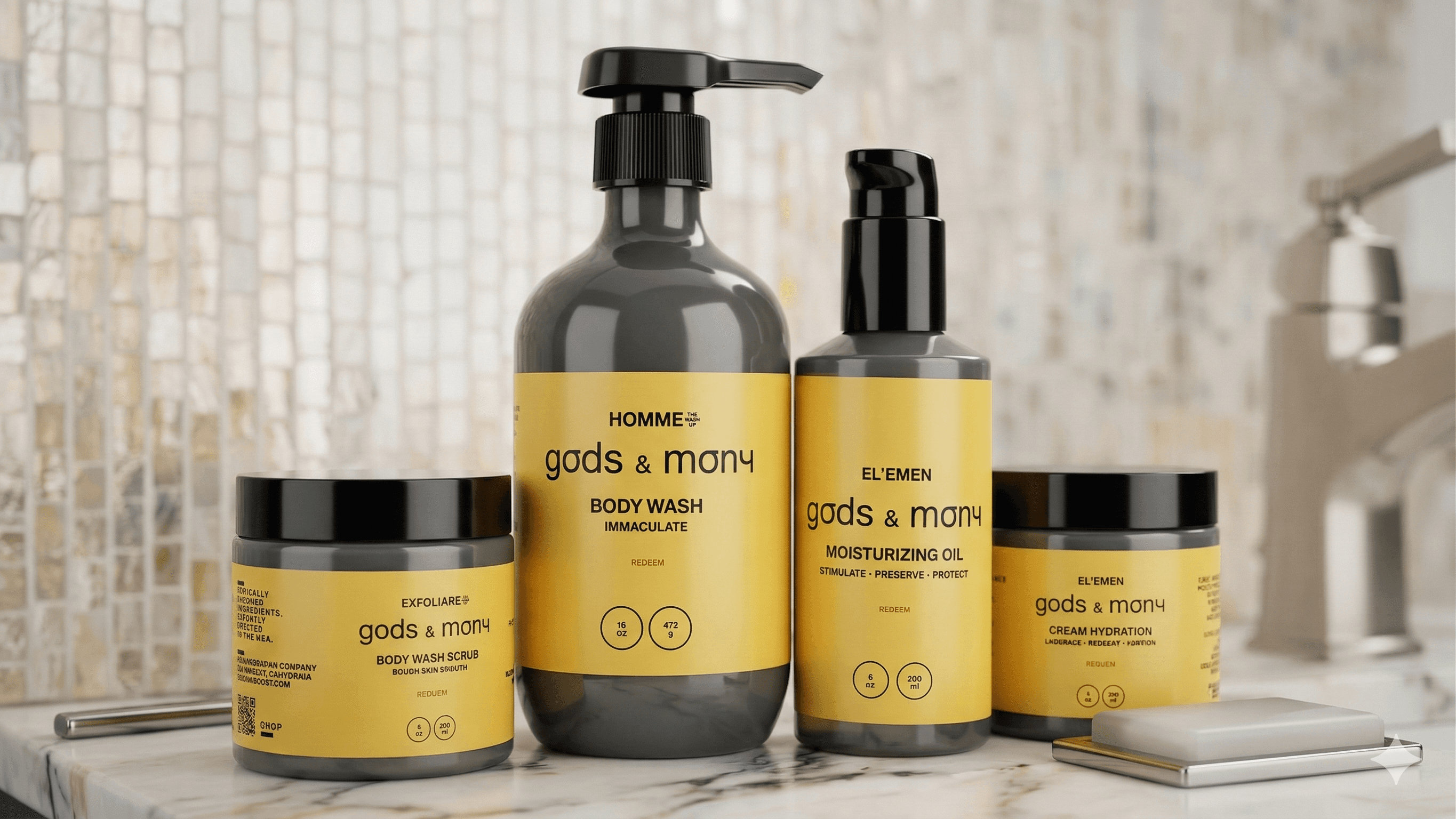
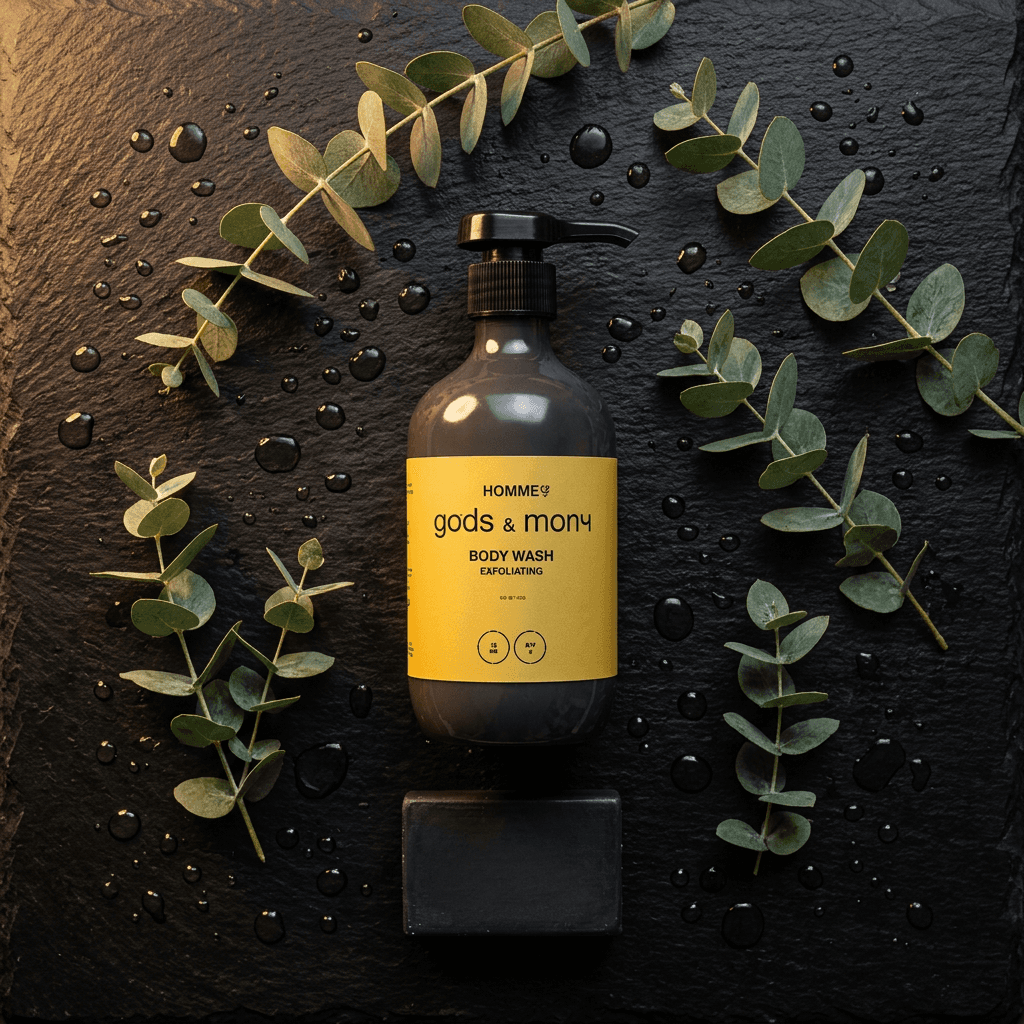
HOMME The Wash Up is what a clean morning looks like. Nothing synthetic. Nothing harsh. Sulfate-free, pH-balanced, built on glycerin, aloe, and coco-derived surfactants. Scent that reads like intention, not a cover-up.
We built this in Los Angeles because we wanted something worth using every day. No SLS. No parabens. No synthetic fragrance masking a cheap base. Every ingredient disclosed. Organic-forward sourcing. Made in the USA.
This isn't grooming for show. It's a standard.
If you're building the full system, pair it with EXFOLIARE Exfoliant for weekly exfoliation and lock in with EL'EMEN Creme Hydration or EL'EMEN Moisturizing Oil post-shower. Browse the full skincare collection to see how it fits together.
Frequently Asked Questions
Is mens body wash actually different from women's body wash? The formulation differences are modest. Men's washes tend to use slightly deeper-cleansing surfactants and masculine fragrance profiles. Skin chemistry between men and women is more alike than marketing suggests. The U.S. men's grooming market hit $7.1 billion in 2025 (NielsenIQ) — the category distinction is mostly commercial. What matters is skin type, not gender label.
Can I use body wash on my face? No. Body wash is tuned for thicker body skin. Facial skin is thinner, more reactive, and needs a lower surfactant load. Using body wash on your face regularly leads to barrier disruption around the eyes and cheeks. Use a dedicated face wash. The chemistry is different for a reason.
How often should I use body wash? Once daily is the standard. Twice a day works if you train hard or live in a humid climate. Healthy skin sits at pH 4.5-5.5 (Dermatology and Therapy, 2024) — over-washing pushes that number up and keeps it there. If your skin feels tight after every shower, wash less. That tightness is a signal.
Are sulfate-free body washes worth it? Yes. Sulfates like SLS are documented barrier disruptors — a 2024 study in the British Journal of Dermatology confirmed they increase transepidermal water loss and shift the skin microbiome toward pathogenic bacteria. Sulfate-free formulas using coco-glucoside and decyl glucoside clean just as effectively without the damage. The switch is worth it for every skin type.
What's the ideal pH for a mens body wash? Between 4.5 and 5.5. That matches healthy skin pH and preserves the acid mantle. Alkaline formulas at pH 9-10 — the range most bar soaps sit in — disrupt barrier function daily. Research published in Dermatology and Therapy (2024) confirms that cosmetic products with pH below 5 support a healthier skin microbiome. The number matters.
Related Reading
Best Moisturizer for Men: The 2026 Guide — pair your wash with the right moisturizer
Men's Skincare Routine: Step-by-Step — where body wash fits in the full system
Men's Exfoliation Guide — how to layer exfoliation with cleansing
The Standard
Most men pick a body wash by smell and price.
The man who reads labels has already made a decision about himself.
Your skin is exposed every day. What you use on it compounds over years, not weeks. The formula matters. The pH matters. The ingredients matter.
Don't treat your body like it doesn't.
Sources
Grand View Research — Men's Personal Care Market Size Report, 2022-2030
Statista — U.S. usage of bar soap 2011-2024
NielsenIQ — U.S. Men's Grooming Market Report, 2025
British Journal of Dermatology (2024) — Immune response to topical sodium lauryl sulfate
Cosmetics, MDPI (2021) — Effect of SLS on Human Skin Physiology and Microbiota
Dermatology and Therapy (2024) — Influence of Cosmetic Skincare Products with pH below 5 on the Skin Microbiome
Mintel — Global Beauty and Personal Care Trends for 2025 and Beyond
Gods and Mony Editorial
Editorial Team
Next posts