Clean ingredients. No compromise.
Organic Mens Skincare: What It Is, Why It Matters, and How to Choose Right
14 min read
2026-04-05
In This Article
What Does "Organic" Actually Mean in Men's Skincare?
Organic vs. Natural vs. Clean: The Words Brands Hope You Confuse
Why Organic Mens Skincare Hits Different for Men
The 10 Ingredients Worth Putting on Your Face
What Are the Toxic Ingredients in Men's Skincare?
How to Read a Skincare Label in 60 Seconds
Which Certifications Actually Mean Something?
Why "Made in the USA" Is More Than a Flag
How to Build a Complete Organic Mens Skincare Routine
Frequently Asked Questions: Organic Mens Skincare
The Standard You Hold
Related Reading
Organic Mens Skincare: The Standard You Either Hold or You Don't
What you put on your skin is a choice. So is who you're willing to become.
Most men don't think about that connection. They grab whatever's on the shelf, whatever a brand spent millions pushing in front of them, whatever comes in the right packaging. They never ask what's inside. They never ask what those ingredients are doing once they cross the skin barrier.
The organic mens skincare conversation isn't about being fragile or precious. It's about being deliberate. It's about holding a standard and refusing to lower it. The men who use clean products aren't following a trend. They've made a decision about how they want to live.
This is the guide for those men.
Key Takeaways
"Organic" is federally regulated. "Natural" is a marketing word. Know the difference.
Men's skin gets shaved daily, which creates more entry points for whatever you apply.
The organic personal care market hit $25.1 billion in 2025 (Grand View Research, 2025) — demand is outpacing regulation fast.
Eight ingredients are worth cutting from your routine entirely.
Clean products are identity. The man who chooses organic isn't being cautious. He's declaring a standard.
What Does "Organic" Actually Mean in Men's Skincare?
Most men have never been given a straight answer on this. Here it is.
"Organic" is regulated by the USDA National Organic Program under 7 CFR Part 205. The same federal rules that govern organic food govern organic skincare. For a product to carry the USDA Organic seal, 95% or more of its agricultural ingredients must be certified organic. The manufacturing facility has to be certified. The supply chain has to be traceable.
The FDA does not define "organic" for cosmetics.
That gap is exactly what brands exploit. A company can print "organic botanicals" on a tube with 2% organic aloe and 98% petroleum filler. That's legal. It's also dishonest. "Made with Organic" requires 70% certified organic content. Anything below that can only list organic components individually. It cannot use the seal. It cannot use the word on the front panel.
When you see organic mens skincare on a product page, don't read the adjective. Check the certification.
The global organic personal care market reached $25.1 billion in 2025 and is projected to reach $44.77 billion by 2030, growing at 9.4% annually. (Grand View Research, 2025). Demand is surging. Oversight is not keeping pace. That means more brands running with the language and fewer brands earning the certification.
Know what you're buying.
The USDA Organic seal is the only federally regulated organic claim in U.S. skincare. It requires 95% or more certified organic agricultural ingredients and a traceable, certified supply chain. The global organic personal care market hit $25.1 billion in 2025 and is growing at 9.4% annually. (Grand View Research, 2025)]
Organic vs. Natural vs. Clean: The Words Brands Hope You Confuse
Here's the hierarchy. One word has a federal definition. The rest are storytelling.
Organic (USDA): Regulated. 95%+ certified organic ingredients. No synthetic pesticides. Traceable. The seal means something because a third party audited it.
Natural: Unregulated. Brand-defined. No minimum percentage requirement. No oversight. A brand can call itself natural while filling a bottle with petroleum derivatives.
Clean: Unregulated by the government, but some third parties verify it. EWG Verified, Credo Clean, Sephora Clean each maintain "no" lists of banned ingredients. Clean means different things depending on who's checking. It's a higher bar than natural. It's not the same as organic.
Green: Not an ingredient claim at all. Usually refers to packaging or sourcing positioning.
Label | Regulated? | What It Guarantees |
|---|---|---|
Organic (USDA) | Yes — USDA NOP (7 CFR 205) | 95%+ certified organic ingredients; traceable supply chain |
Natural | No | Nothing. Brand-defined. |
Clean | No — but verifiable by EWG, Credo, Sephora Clean | Excludes a defined "no" list. Standards vary by verifier. |
Green | No | Packaging or sourcing claim only. Not an ingredient standard. |
Natural mens skincare is a starting point for asking better questions.
USDA Organic is an answer.
Why Organic Mens Skincare Hits Different for Men
Men's skin is built differently. Thicker, oilier, structurally denser. And it gets shaved. Most mornings, the stratum corneum — the skin's protective outer layer — is physically stripped. That barrier disruption creates more entry points for whatever formula goes on next.
If the formula is clean, that's an advantage. If it's loaded with endocrine disruptors and synthetic fragrance, that barrier disruption becomes a liability.
When we started building Gods and Mony, this was one of the first things that became clear. The products men put on post-shave absorb faster and more completely than most men realize. Ingredient quality isn't a secondary concern for men. It's the primary one.
The numbers confirmed it. U.S. men's facial skincare usage jumped 68% between 2022 and 2024, and 52% of American men now use facial products regularly. (Mintel, 2024). Among men aged 18 to 34, 46% listed clean formulas as a key purchase factor. 60% of clean-beauty buyers dropped a product in the past year after spotting an ingredient concern. (Mintel, 2024).
Men are reading labels.
The man who chooses organic isn't being cautious. He's being deliberate. He understands that daily use means daily exposure. And he's decided that what goes on his face reflects who he is.
The 10 Ingredients Worth Putting on Your Face
You don't need twenty ingredients. You need the right ones, sourced correctly, dosed effectively. This is the shortlist.
These are the same benchmarks we applied when building the Gods and Mony formulas. Every ingredient below made the cut because the evidence for it holds across multiple independent sources, not because it photographs well.
Ingredient | Function | Why It Works |
|---|---|---|
Hyaluronic acid | Hydration, plumping | Holds up to 1,000x its weight in water |
Niacinamide (B3) | Barrier repair, pore refinement | Reduces transepidermal water loss, regulates sebum |
Vitamin C (L-ascorbic) | Antioxidant, brightening | Drives collagen synthesis, UV oxidative defense |
Squalane | Moisture lock | Skin-identical lipid, non-comedogenic |
Jojoba oil | Sebum balancing | Molecular match to human sebum |
Rosehip seed oil | Regeneration, fine lines | Natural retinoic acid and linoleic acid |
Aloe vera (organic) | Post-shave calm, soothing | Anti-inflammatory polysaccharides |
Shea butter (unrefined) | Barrier support | Rich in stearic and oleic fatty acids |
Green tea extract | Antioxidant, anti-redness | EGCG polyphenols, well-documented activity |
Bakuchiol | Retinol alternative | Comparable efficacy, no irritation risk |
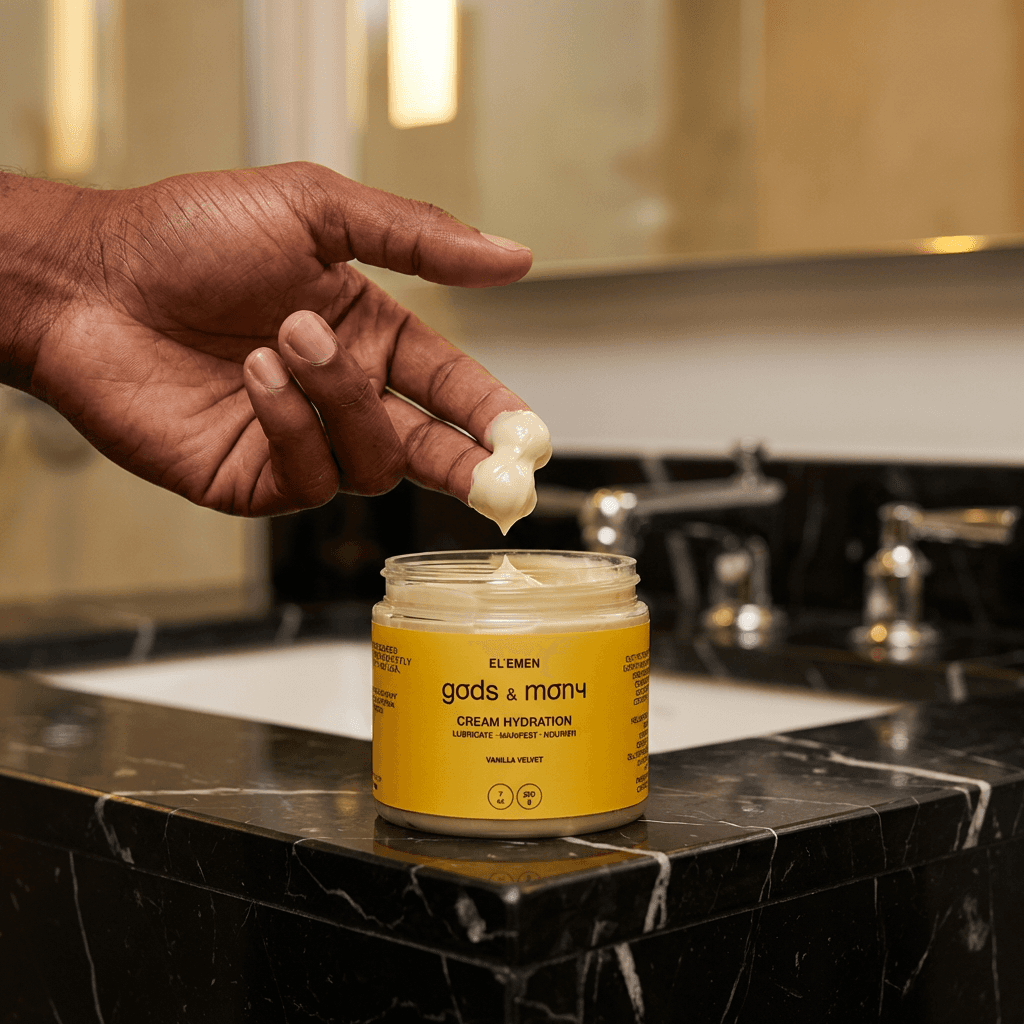
EL'EMEN Creme Hydration was built around this framework — hyaluronic, squalane, and organically sourced botanicals stacked for barrier repair on post-shave skin. Every ingredient earns its place.
What Are the Toxic Ingredients in Men's Skincare?
Eight ingredients show up repeatedly in peer-reviewed literature on endocrine disruption, barrier damage, and carcinogenic risk. The NIH and NIEHS have documented the concerns. Most mainstream grooming products still use them because they're cheap, effective at extending shelf life, and the FDA doesn't require pre-market safety approval for cosmetics.
Cut these eight.
Ingredient | Risk | Found In |
|---|---|---|
Parabens (methyl-, propyl-, butyl-) | Estrogen mimicry, hormone disruption | Moisturizers, cleansers, shaving cream |
Phthalates (DBP, DEHP) | Endocrine disruption, sperm DNA damage (NIEHS) | Fragrance, aftershave, hair spray |
SLS/SLES | Barrier disruption, 1,4-dioxane contamination risk | Face wash, body wash |
Synthetic fragrance / "Parfum" | Undisclosed chemical mixtures, often contains phthalates | Colognes, lotions, deodorant |
Formaldehyde releasers (DMDM hydantoin, quaternium-15) | Known carcinogen, slow-release formaldehyde | Shampoo, body wash |
PEGs (polyethylene glycols) | Often contaminated with 1,4-dioxane and ethylene oxide | Creams, cleansers |
Mineral oil / petrolatum | Petrochemical occlusive, PAH contamination if unrefined | Lip balm, moisturizers |
Oxybenzone | Endocrine disruptor, banned in Hawaii for reef toxicity | Sunscreen, SPF moisturizers |
The average American uses nine personal care products daily, exposing themselves to 126 unique chemical ingredients — most never safety-tested by the FDA. (Environmental Working Group, Skin Deep database).
Nine products. 126 ingredients. Zero pre-market testing requirement.
That's not a system built to protect you. It's a system that assumes you'll protect yourself.
The average American uses nine personal care products daily, exposing themselves to approximately 126 unique ingredients. The FDA does not require pre-market safety review for cosmetic ingredients. The EWG Skin Deep database tracks over 130,000 products and flags common toxins including parabens, phthalates, and synthetic fragrance. (Environmental Working Group, Skin Deep, 2025)]
How to Read a Skincare Label in 60 Seconds
This takes sixty seconds. Most men never spend thirty.
Ingredient lists are printed in descending order by weight down to 1%, then in any order. That one rule turns a label into a map.
Seconds 0-10. Flip to the back. Read the first five ingredients. They make up 70 to 90% of the product by weight. Water first is normal. A synthetic you can't identify as the second ingredient is worth pausing on.
Seconds 10-30. Scan for the eight cut-list ingredients above. Run the mental search: paraben, phthalate, SLS, fragrance, PEG, DMDM, mineral oil, oxybenzone. One hit doesn't disqualify. Three hits does.
Seconds 30-45. Look at the bottom third for your actives. Niacinamide, hyaluronic, squalane, the organic botanicals you're paying for. If they're last, they're dosed under 1%. Marketing amounts.
Seconds 45-60. Check for certification seals. USDA Organic, COSMOS, EWG Verified, Leaping Bunny. No seals means you're trusting the copywriter.
Sixty seconds. You now know more about that product than the brand assumed you would.
Which Certifications Actually Mean Something?
Certifications cost money and require third-party audits. Brands don't earn them by accident. Four carry real weight in organic mens skincare.
USDA Organic. Certifies ingredient sourcing. 95%+ certified organic agricultural ingredients, no synthetic pesticides, traceable supply chain. Governed by 7 CFR Part 205 and administered by USDA-accredited certifiers.
COSMOS. European standard. Minimum 95% natural-origin ingredients, at least 20% organic in the full formula (10% for rinse-off products). Administered by Ecocert, Soil Association, and partner bodies.
EWG Verified. Hazard screening standard. Products must pass EWG's full ingredient review, include no ingredients on their "unacceptable" list, and disclose all ingredients completely. Stricter than most retailer clean standards.
Leaping Bunny. Cruelty-free certification that covers the full supply chain, including suppliers, not just the finished product.
A product carrying two or more of these seals is doing real work.
A product carrying none is asking you to trust the marketing.
Most men focus on the product claim. The certification is the actual signal. When a brand invests in third-party audits, it's making a structural commitment to a standard, not a one-time copy decision. That's the difference between a brand you can trust and one that's dressed for the part.
Why "Made in the USA" Is More Than a Flag
Under FTC rules, "Made in USA" means all or virtually all of the product is made domestically. For skincare, that means tighter chain-of-custody: batch testing under FDA Good Manufacturing Practice guidelines, traceable raw material lots, and shorter supply chains that reduce contamination and oxidation risk in transit.
It also means the brand operates under FDA facility registration, cosmetic product listing under MoCRA (Modernization of Cosmetics Regulation Act of 2022, enforced through 2024 to 2026), and adverse-event reporting requirements. Offshore manufacturers aren't always held to the same standards.
Gods and Mony formulates and manufactures in Los Angeles. Short supply chain. Domestic GMP facility. Traceable raw materials from source to shelf.
That's not a marketing position. That's a quality decision.
When you're building organic mens skincare for men who demand clean, every link in the chain has to hold. The man who buys Gods and Mony isn't buying a product. He's buying the system behind the product.
How to Build a Complete Organic Mens Skincare Routine
You don't need complexity. You need consistency with the right products.
Morning
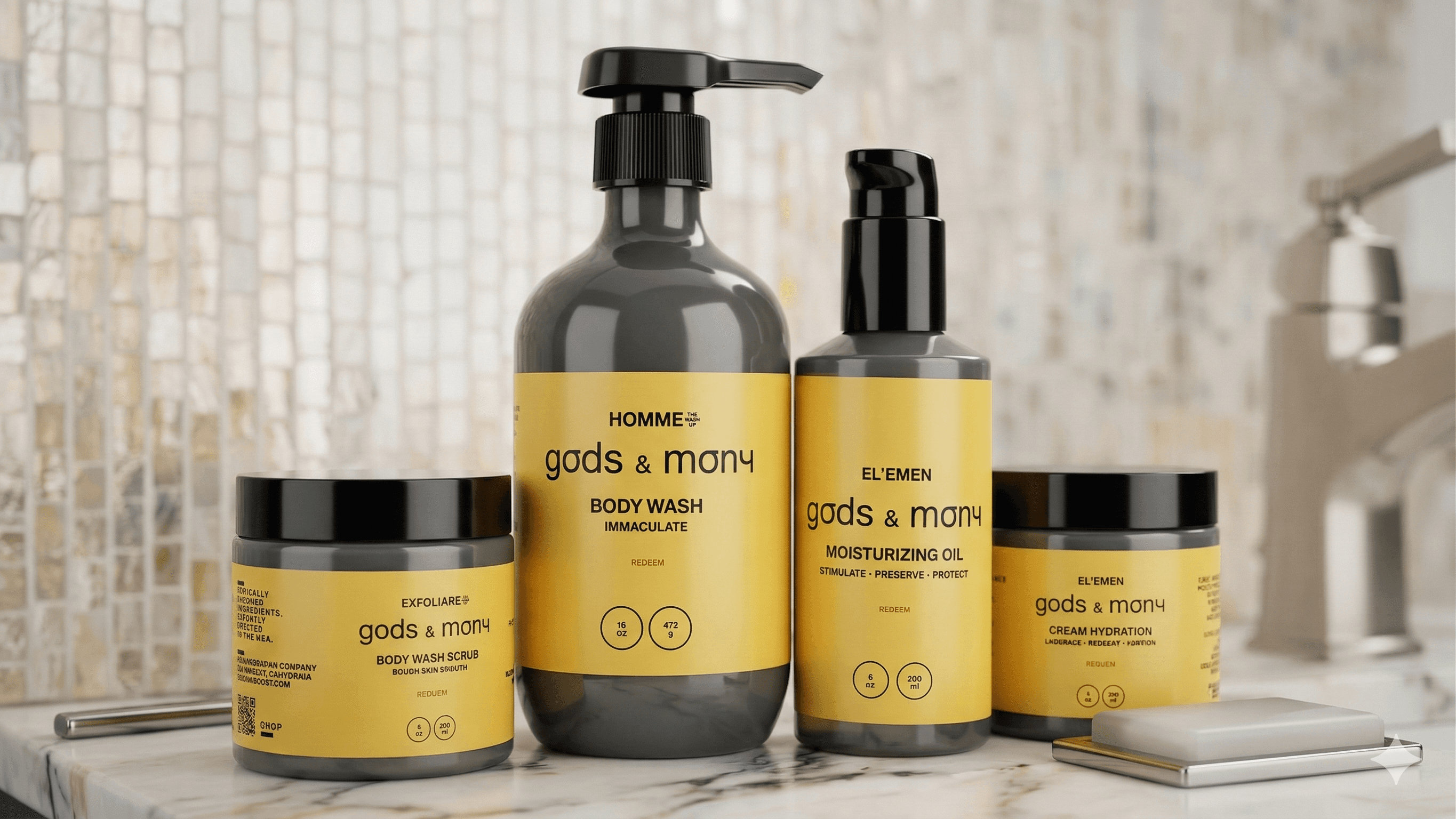
Cleanse with something that strips what built up overnight without wrecking the barrier. HOMME The Wash Up is a clean wash built for men's skin, free of SLS and synthetic fragrance.
Hydrate. Apply moisturizer while the skin is still slightly damp to lock water in. EL'EMEN Creme Hydration runs hyaluronic acid and squalane together for barrier support that lasts.
Evening
Exfoliate two to three times a week. Dead cell buildup clogs pores and dulls texture. EXFOLIARE Exfoliant clears the surface without stripping.
Seal with an oil. At night, the skin is in repair mode. EL'EMEN Moisturizing Oil delivers organically sourced botanicals into the skin during the repair window.
Four products. Two routines. One standard.
Frequently Asked Questions: Organic Mens Skincare
Is organic skincare actually better for men's skin?
For men who shave daily, yes. Shaving strips the skin's outer barrier every morning. Organic formulas built around clean actives reduce barrier stress and cut daily exposure to endocrine disruptors. That's not a minor difference over years of daily use. 52% of American men now use facial skincare products regularly, and 46% of men aged 18 to 34 name clean formulas as a key purchase factor. (Mintel, 2024).
What's the difference between organic and natural in mens skincare?
Organic is a federally regulated term tied to USDA certification. Natural is not regulated and means nothing specific in the U.S. A product can legally call itself natural with zero certified organic ingredients. Treat natural as a marketing claim until the brand proves otherwise with certification.
Can a product be clean but not organic?
Yes. Clean refers to what's excluded from the formula: toxins, endocrine disruptors, synthetic fragrance. Organic refers to how the ingredients were grown and sourced. A clean product can use conventionally farmed botanicals. Organic is a higher standard on sourcing. Both standards matter. They're not the same thing.
What do I look for on a skincare label as a man?
Start with the first five ingredients — they're 70 to 90% of the product by weight. Then scan for parabens, phthalates, SLS, synthetic fragrance, PEGs, formaldehyde releasers, mineral oil, and oxybenzone. Check the bottom third for the actives you're paying for. If your hero ingredients are last, they're dosed under 1%. Finally, look for USDA Organic, COSMOS, or EWG Verified seals.
Is Gods and Mony organic?
Gods and Mony is formulated in Los Angeles using clean, organically sourced ingredients built to a standard the brand holds by choice, not because a retailer required it. The man who uses it doesn't need a label to tell him it's the right product. He already knows. Explore the full collection or take the quiz to find where to start.
The Standard You Hold
No one is coming to enforce this for you.
The FDA doesn't require pre-market safety review for cosmetics. The word "natural" means nothing. Thousands of brands are spending marketing budgets teaching you to feel good about things that aren't what they appear to be.
The man who chooses organic mens skincare is making a decision for himself. Not because someone told him to. Not because it's trending.
Because he holds a standard.
Gods and Mony is clean because the man who uses it demands that standard. The formulas were built in LA, sourced with intent, and designed for men who've decided that what they put on their skin reflects who they are. Not who they're trying to look like.
Integrity isn't loud. But it compounds. Every product you use is a vote for the standard you live by.
Hold the standard.
Explore the collection. Take the quiz. Or read about what we built and why.
Related Reading
Best Moisturizer for Men: A 2026 Buyer's Guide
The Complete Men's Skincare Routine (AM + PM)
Men's Body Wash Guide: Clean Ingredients That Work
Gods and Mony Editorial
Editorial Team
Next posts