The ritual behind the man.
Mens Self Care: The Ritual That Defines Who You Are
13 min read
2026-04-21
In This Article
Why Mens Self Care Is Now a Cultural Statement
What Does a Real Mens Self Care Routine Actually Look Like?
How Grooming Culture Became Identity Culture for Men
Does Mens Self Care Go Beyond the Skin?
What Men Who Command Presence Actually Do Differently
How to Start a Mens Self Care Routine You'll Actually Keep
Frequently Asked Questions About Mens Self Care
This Is Who You Are Now
Mens Self Care: The Ritual That Defines Who You Are
Mens self care isn't a trend. It's a declaration.
It's the man who wakes up before the city does and moves through his morning with intention. It's the one who knows what goes on his skin, why it goes on, and what standard he holds himself to. That man doesn't just look good. He operates from a different place entirely.
The shift is cultural. It's economic. It's generational. The global men's personal care market hit $90.1 billion in 2024, projected to climb to $115.3 billion by 2028. (Statista) That number isn't vanity. That's men deciding they're worth the investment.
This post is about what mens self care actually means when you strip the noise away. The rituals. The identity behind the routine. The version of you that shows up when you've handled your standard first.
Key Takeaways
Mens self care is an identity statement, not a beauty checklist.
78% of men globally now use at least three grooming products regularly, up from 62% five years ago. (Male Grooming Industry Report)
Gen Z men are the biggest spenders in male grooming: 42% devote a larger share of income to it than millennials do.
A consistent skincare routine is the single highest-ROI act in a man's self-care stack.
Self-care isn't maintenance. It's the ritual that shapes your standard.
Why Mens Self Care Is Now a Cultural Statement
Self-care used to be coded as soft. That framing is finished.
78% of men globally now use at least three grooming products regularly. That's up from 62% five years ago. (Male Grooming Industry Report) This isn't a niche movement. This is a mass cultural shift playing out in bathrooms, gyms, and boardrooms across the country.
The man who takes care of himself is read differently. He walks into a room and something registers before he speaks. Presence. Sharpness. The kind of composure that only comes from a man who has his own standard and keeps it.
That's what self-care actually builds. Not a complexion. A posture.
In Los Angeles, this has been true for years. The culture here sits at the intersection of physical excellence and identity. Men in this city understand that how you present yourself is how the world calibrates you. Not because they're vain. Because they're serious.
Men who practice holistic self-care are 2.2x more likely to feel life balance, 1.6x more satisfied with themselves, and 1.4x more satisfied with their relationships. (Good Men Project) Read that again. Not a better moisturizer. Better life outcomes.
That's the real argument for mens self care. It isn't cosmetic. It's foundational.
The men leading in culture right now understand this. The athlete who moves through his recovery with discipline. The creative who builds his morning ritual like it's sacred. The executive who shows up to every room looking like he prepared. These men aren't doing self-care by accident. They built it as a practice.
You are a man who holds a standard. Self-care is how you remind yourself what that standard is, every single morning.
Citation Capsule: The global men's personal care market reached $90.1 billion in 2024 and is projected to hit $115.3 billion by 2028, according to Statista, marking one of the fastest-growing consumer segments and signaling a broad cultural shift in how men invest in themselves.
What Does a Real Mens Self Care Routine Actually Look Like?
Most men overcomplicate it or skip it entirely. Neither works.
The data is clear: 68% of U.S. Gen Z men now report regular use of facial skincare. (Cameo College) That number is rising fast. And the ones building the habit early are the ones who show up differently at 35, 40, and 50.
A real routine isn't long. It's consistent.
Morning: The Foundation Set
You start clean.
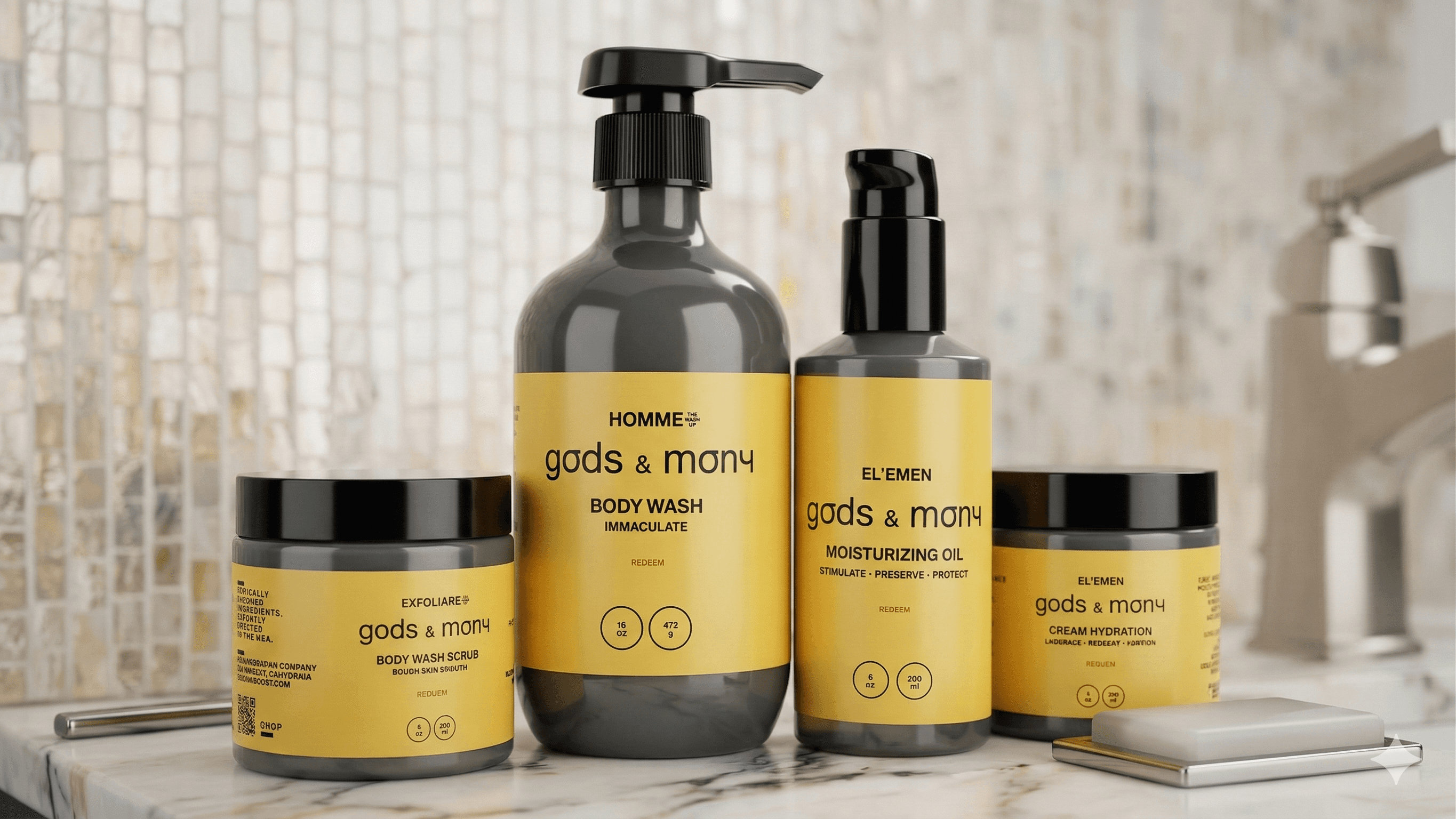
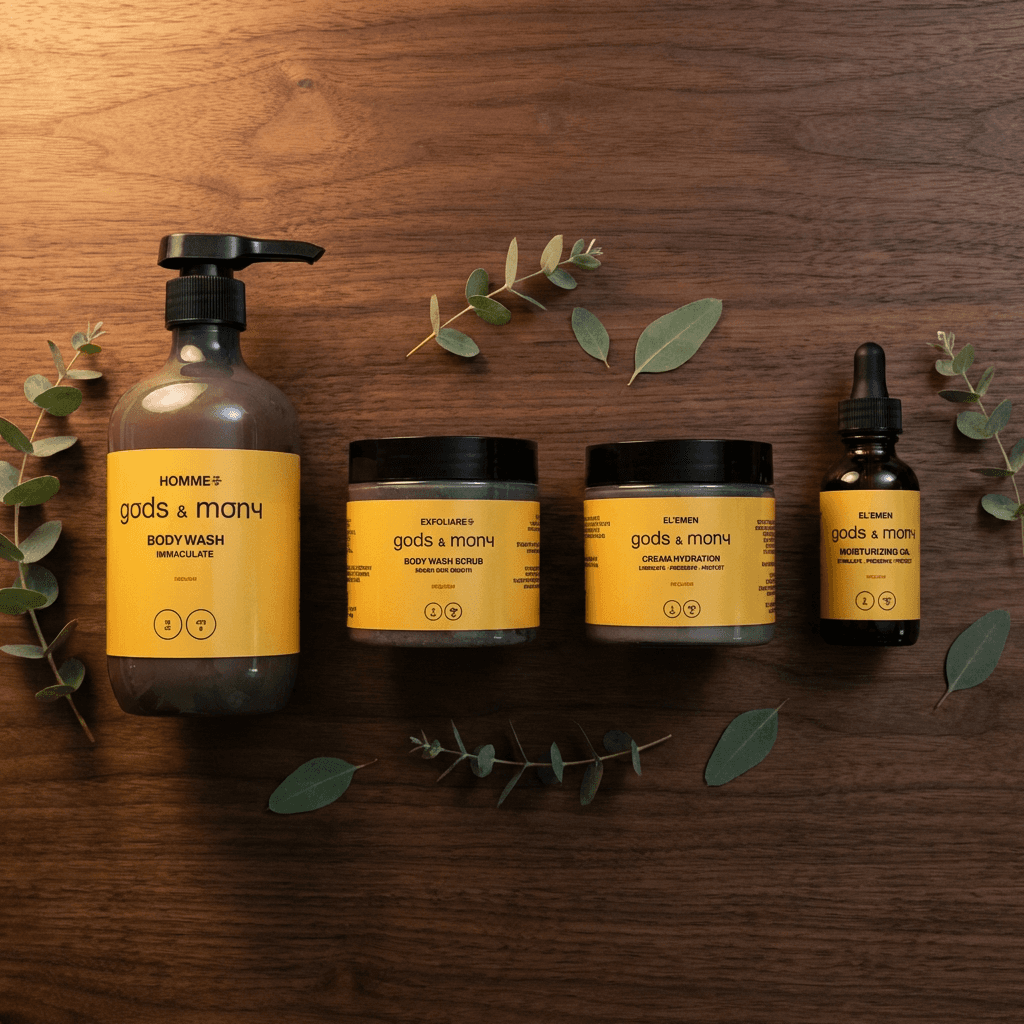
HOMME The Wash Up is what clean discipline looks like. Built with organic ingredients, no synthetic strippers, no compromise. It sets the tone for the day the way a clean workspace sets the tone for focused work. What you start with matters.
After you wash, you hydrate. Dehydrated skin is broadcasting stress, fatigue, and age. None of those are signals you want leading the room.
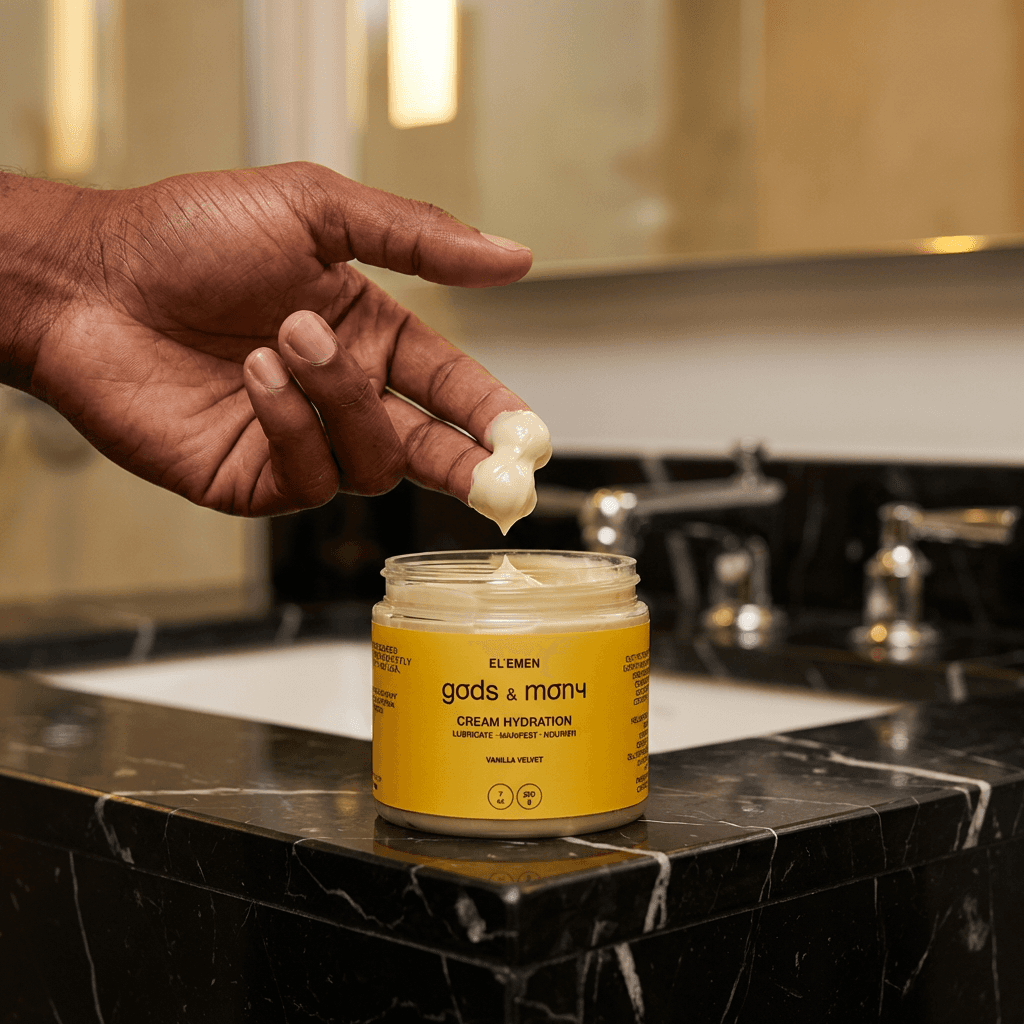
EL'EMEN Creme Hydration locks moisture in without weight or residue. It absorbs. Your skin drinks it. You move on. That's how it should work.
Three minutes. Two products. Your skin is handled.
The Weekly Reset
Two or three times a week, you go deeper.
EXFOLIARE Exfoliant clears what daily washing leaves behind: dead cells, buildup, the friction that dulls your surface. After exfoliation, every product you apply works harder. Your skin receives more. That's the mechanic.
You are a man who doesn't let things accumulate. Not in your schedule. Not on your skin.
Evening: Recovery Mode
Nighttime is when skin repairs itself. Feed the process.
EL'EMEN Moisturizing Oil works while you sleep. Organic, fast-absorbing, built for men's skin. It isn't heavy. It's purposeful. You wake up with skin that looks like it rested, because it did.
The ritual closes the day. The same way a disciplined man locks the door on his work before he sleeps, you give your skin the signal that today is done and tomorrow starts clean.
Citation Capsule: 68% of U.S. Gen Z men report regular facial skincare use, according to Cameo College's 2025 grooming trends report, a figure that signals a generational shift in standards. The men building this habit early are protecting their long-term skin health and public perception simultaneously.
How Grooming Culture Became Identity Culture for Men
This didn't happen overnight. It happened in layers.
Pinterest reported a 230% surge in searches for male facial treatments in 2025. That's not a blip. That's men actively looking for information, for products, for a framework to take their appearance seriously.
The cultural gatekeepers shifted first. Athletes. Musicians. Actors. The men who moved culture stopped treating grooming as optional. They wore skincare the way they wore confidence: deliberately, unapologetically, as part of who they are.
Then Gen Z arrived.
42% of Gen Z men now devote a larger share of income to grooming than their millennial counterparts, compared to 29% of millennials doing the same. (Barclays Bank, 2025) These men grew up watching culture reward the ones who showed up intentional. They absorbed it. They built it into their identity early.
This is grooming as culture. Not as routine.
When a man invests in his skin, his wardrobe, his wellness practices, he isn't performing something external. He's expressing something internal. He is telling the world who he is before he opens his mouth.
The Gods and Mony story is built on exactly this truth. That men who command presence don't wait for the room to decide who they are. They walk in already decided.
That's the identity behind mens self care. You aren't maintaining a body. You are building a man.
Citation Capsule: Pinterest recorded a 230% surge in male facial treatment searches in 2025, reflecting an accelerating cultural interest among men in intentional grooming. Cross-referenced with Barclays Bank 2025 data showing 42% of Gen Z men outspending millennials on grooming, the cultural shift is both attitudinal and behavioral.
Does Mens Self Care Go Beyond the Skin?
Yes. The skin is the surface. The practice is deeper.
Self-care for men is the whole stack. Sleep. Movement. What you eat. How you manage stress. The products you use every morning are one layer of a larger practice. Men who understand this operate differently.
Men who practice holistic self-care are 2.2x more likely to report life balance and 1.6x more satisfied with themselves. (Good Men Project) Those numbers don't come from moisturizer alone. They come from a man who decided to take his own wellbeing seriously.
Sleep Is Self-Care
Seven to nine hours is a performance choice, not a luxury. Cortisol drops. Skin repairs. Testosterone recovers. The man who protects his sleep is protecting his edge.
Movement Is Self-Care
Your morning routine isn't complete if your body is sedentary. Thirty minutes of movement changes your biochemistry. It sharpens your mind. It signals to your nervous system that you're built for effort.
Nutrition Is Self-Care
Your skin is a mirror for what you consume. Omega-3s, antioxidants, hydration: these aren't supplements for the obsessed. They're inputs for the serious man.
The Morning Ritual as Anchor
The grooming ritual ties it together. It's the bookmark on your morning. The moment where you look at yourself and choose, deliberately, to show up at your best.
That's why the products matter. Not because clean skin is the goal. Because the ritual of caring for it tells your nervous system: I take myself seriously. I operate from standards. I'm not leaving my standard to chance.
Not sure which routine fits your life right now? The skin quiz is built to tell you exactly what your skin needs, no guessing.
Citation Capsule: Men who practice holistic self-care are 2.2x more likely to feel life balance and 1.6x more satisfied with themselves, according to the Good Men Project's analysis of male wellness patterns. These outcomes reflect a whole-system approach to self-care, not isolated product use, making the daily ritual a compound investment.
What Men Who Command Presence Actually Do Differently
They don't wing it.
The U.S. men's grooming category reached $7.1 billion in sales in the latest measured year, up 6.9% year-over-year. (NielsenIQ) That growth reflects real purchasing decisions made by real men who've decided their standard is worth spending on.
The men at the top of that curve have something in common.
They made a decision.
Not a complicated one. They decided that showing up well, consistently, was non-negotiable. They built a routine that cost them ten minutes in the morning and gave them back hours of compounded confidence across the day.
70% of men now prefer grooming formulations with natural or organic ingredients. (Male Grooming Industry Report) They're not just buying more products. They're buying better ones. They're reading labels. They're choosing clean over convenient. That's a different consumer. That's a man with standards.
In Los Angeles, the men who move in rooms with authority share a common denominator. Not their net worth. Not their title. Their standard. The way they carry themselves. The care they visibly extend to their own body and presentation. It's not accidental. It's practiced.
The full skincare collection is built for that man. Clean formulas. Organic ingredients. Made in the USA. Products that perform because they're built from a standard, not a price point.
Presence isn't issued. It's built. One ritual at a time.
Citation Capsule: The U.S. men's grooming category reached $7.1 billion in sales, growing 6.9% year-over-year, according to NielsenIQ's 2025 market report. Simultaneously, 70% of men globally prefer natural or organic grooming formulations, indicating the market growth is driven by discerning consumers elevating their standard, not simply buying more.
How to Start a Mens Self Care Routine You'll Actually Keep
The biggest barrier isn't knowledge. It's consistency.
In our experience building skincare for men in the luxury segment, the routines that stick are the ones built on three rules: they're short, they're sensory, and they're tied to an existing behavior. Morning coffee is already non-negotiable. Stack your skincare on top of it.
Start with two products. A clean wash and a moisturizer. That's it. Build the anchor before you build the architecture.
HOMME The Wash Up and EL'EMEN Creme Hydration are the entry point. Two steps. Three minutes. The baseline from which everything else compounds.
Once the baseline is locked, add the oil. Add the exfoliant. The routine grows to match the man's evolving standard, not a prescribed checklist.
The men who build sustainable routines don't rely on motivation. They rely on identity. "I am a man who takes care of his skin" is a more durable driver than "I should try to moisturize more."
Identity language is load-bearing. Use it.
If you want a personalized starting point, take the skin quiz. It reads your skin type, your current habits, your goals, and gives you a recommendation built for you specifically.
The bundles are also built for this. Everything your routine needs, already assembled, at a better price point than building it piece by piece.
The men who stay consistent with self-care don't describe it as discipline. They describe it as respect. Respect for their future self. Respect for the standard they've decided to hold. When self-care becomes a form of self-respect rather than a task, the consistency problem disappears.
Frequently Asked Questions About Mens Self Care
What is mens self care and why does it matter?
Mens self care is the practice of actively investing in your physical, mental, and emotional wellbeing through intentional habits. It matters because the outcomes are measurable: men who practice holistic self-care are 2.2x more likely to feel life balance and 1.6x more satisfied with themselves. (Good Men Project) It's not maintenance. It's a competitive standard.
What should a basic mens self care routine include?
Start with three foundations: cleanse, moisturize, and protect. A quality face wash like HOMME The Wash Up removes daily buildup cleanly. A moisturizer like EL'EMEN Creme Hydration locks in hydration. SPF protects the investment. Add exfoliation two to three times weekly once the baseline is consistent.
How long does a mens self care routine take?
Three to five minutes in the morning. Five to seven minutes at night if you include an oil. The barrier isn't time. It's prioritization. Once the routine is anchored to an existing habit, like your morning coffee or post-shower window, it becomes automatic rather than effortful.
Is mens self care just skincare?
No. Skincare is one layer. Real mens self care includes sleep quality, movement, nutrition, stress management, and the daily rituals that reinforce a man's standard for himself. Grooming is where most men start because the results are visible and fast. The deeper practice expands from there.
Why are more young men investing in grooming and self-care?
Gen Z men are the biggest spenders in male grooming: 42% devote a larger share of income to it compared to 29% of millennials. (Barclays Bank, 2025) They grew up in a culture where male grooming was normalized, even celebrated. They understand the signal their appearance sends. They invest accordingly.
This Is Who You Are Now
You are a man with a standard.
You don't leave your appearance to chance. You don't skip the ritual when it's inconvenient. You hold the line because the line is yours.
Mens self care isn't what you do before you walk out the door. It's the proof of who you've decided to be.
The ritual is the man. And the man shows up.
Every morning you choose yourself, you compound something that can't be faked: presence, sharpness, the quiet authority of a man who operates from intention. That's what the room feels when you walk in.
Build it. Keep it. Let it speak before you do.
Gods and Mony is a Los Angeles-based men's skincare and apparel brand built for men who command presence. Every formula is USA-made, clean, and organic.
Gods and Mony Editorial
Editorial Team
Next posts