Control your surface.
Oily Nose in Men: Why It Happens and How to Fix It (2026)
15 min read
2026-04-12

In This Article
Why Is Your Nose So Oily? Start Here.
What an Oily Nose Actually Costs You
Does Skipping Moisturizer Help an Oily Nose?
Why Is Your Nose Still Oily After Moisturizer?
How to Get Rid of an Oily Nose: The 3-Step System
What Happens to Your Nose After You Shave?
Do Blotting Papers and Mattifiers Actually Work?
Does Your Diet Affect Your Oily Nose?
How Long Before You See Results?
FAQ: Oily Nose in Men
This Is How You Move Forward
Oily Nose Won't Stop Shining? Here's What Your Skin Is Telling You.
Your skin is reacting. To what you're putting it through. Or not putting it through.
An oily nose isn't a flaw in your genetics. It isn't bad luck. It's a signal -- and most men have been taught to suppress it instead of read it.
Here's the reality: the male nose sits inside the most oil-dense zone on the human body, packed with glands that respond directly to testosterone, stress, and the routines you run every morning. Most skincare advice ignores all of that. It gives you gender-neutral tips written for someone else's skin.
This isn't that.
This is the biology, the system, and the standard. All of it for men who want answers, not excuses.
Key Takeaways
The T-zone holds 400-900 sebaceous glands per cm2 -- roughly 8x the density of your arms (PMC, 2025)
Men produce up to 4x more sebum than women, driven by testosterone and DHT
Skipping moisturizer makes oily skin worse. That's not opinion -- that's biology (PubMed, 2013)
A 3-step routine -- cleanse, exfoliate, hydrate -- addresses oil at the source
52% of US men now use facial skincare, up from 31% in 2022 (Strive Skin, 2025)
Why Is Your Nose So Oily? Start Here.
Most men blame the wrong thing. They blame their diet, their genes, their climate. But the answer is right beneath the surface -- literally.
Your nose sits at the center of the T-zone. That zone contains 400-900 sebaceous glands per cm2, compared with just 50-100 per cm2 on your arms and legs (PMC12109737, 2025). It is the most oil-productive region of the male body.
And the nose doesn't just have density. It has output. Research shows nasal sebaceous glands are more productive per unit than anywhere else on the face (PubMed 8791568). Fewer glands. More oil per gland. Faster surface migration through thinner skin.
That's not a problem. That's just what your skin does.
Citation Capsule: The T-zone contains 400-900 sebaceous glands per cm2 -- roughly 8x the density of upper-arm skin -- making it the most oil-productive zone on the male body. Nasal glands are the most productive per unit in this region, according to PMC12109737 (2025) and PubMed 8791568.
Testosterone Is Running This
Sebaceous glands have androgen receptors. Testosterone and its derivative DHT plug directly into those receptors and tell the glands to produce. Men produce up to 4x more sebum than women because of higher circulating androgen levels (PMC5605215).
Normal sebum output sits around 1 mg per 10 cm2 over three hours. Oily skin exceeds 1.5 mg in the same window.
Your body is doing this on purpose.
Women's oil levels fluctuate with hormonal cycles. Men's stay relatively consistent throughout adult life (Journal of Dermatological Treatment, 2023). Your oily nose at 25 will still be oily at 45. It does not resolve on its own.
Why the Nose Gets It Worse
Three things converge at the nose that don't converge anywhere else.
First, higher per-gland oil output. Second, larger pores that hold and display sebum more visibly. Third, thinner nasal skin that lets oil reach the surface faster than on your forehead or chin.
Add daily friction -- glasses, touching your face, wiping sweat -- and the nose stays perpetually stimulated.
Most guides lump the whole T-zone together. The nose has its own oil profile. Treating it the same as your forehead misses the point.
What an Oily Nose Actually Costs You
Shine is the obvious part. But it's not the whole story.
96% of men with oily skin report shiny appearance as their primary concern. 68% say their skin makes them feel "unclean." 59% feel self-conscious about it every day (PMC2577631, 2007).
You're not vain for caring. You're responding to something real.
A man with oily skin isn't a man with a problem. He's a man who hasn't found his standard yet.
Stress Makes the Loop Worse
81% of oily skin sufferers say stress worsens their condition (PMC2577631). Cortisol stimulates sebum production. So you notice the shine, feel self-conscious, stress rises, glands respond. More oil. More shine.
That's the loop. And the only way to break it is with a routine that handles the oil mechanically -- so you stop thinking about it.
Oily skin now represents 39.6% of the men's skincare market, the largest segment by skin concern (Persistence Market Research, 2026). Men are already looking for answers. Most just haven't found the right ones yet.
Citation Capsule: 96% of oily skin sufferers cite shine as their primary concern, 68% report feeling unclean, and 81% say stress worsens symptoms -- forming a self-reinforcing cycle where self-consciousness raises cortisol, which directly increases sebum output (PMC2577631, 2007).
Does Skipping Moisturizer Help an Oily Nose?
No. Skipping moisturizer makes your oily nose worse.
Men who skip daily skincare have significantly higher sebum levels and greater transepidermal water loss than men who moisturize (PubMed 23279047, 2013). When your skin loses water, sebaceous glands compensate by producing more oil. You end up greasier than before you washed.
This is the most common mistake men with oily skin make. And it makes complete sense from the outside -- why add moisture to already-oily skin? But hydration and oil are different systems. Hydration is water. Oil is sebum. You need the first to calm the second.
How the Rebound Works
Strip your skin with a harsh cleanser or skip moisturizer entirely, and the stratum corneum -- the outermost skin layer -- loses water. Sensors detect the dryness and signal glands to increase output.
You wash. You skip moisturizer. You get oilier. You wash harder.
Most men run this cycle for years and never understand why it isn't working.
The American Academy of Dermatology explicitly recommends moisturizing even with oily skin, using products labeled "oil free" and "noncomedogenic" (AAD). That's not a preference. That's the clinical standard.
Citation Capsule: Men who skip daily skincare have significantly higher sebum output and increased transepidermal water loss compared to those who moisturize -- confirming that dehydration triggers compensatory oil production (PubMed 23279047, 2013). The AAD recommends moisturizing oily skin with lightweight, noncomedogenic formulas.
Why Is Your Nose Still Oily After Moisturizer?
If your nose shines within 30 minutes of applying moisturizer, the product is wrong for your skin. Not moisturizer itself. That specific product.
The issue isn't the step. It's the formula.
What a Wrong Moisturizer Does
Heavy butters -- shea, coconut oil, petroleum-based creams -- sit on the surface. They don't absorb. They trap sebum underneath and create a visible slick.
Look for these signals that your moisturizer is too heavy:
Nose feels coated or filmy 20 minutes after application
Visible T-zone shine within an hour
Blackheads forming along the nasal crease
Skin feels both oily and tight at the same time
That last one -- oily and tight together -- is the clearest tell. Your skin is dehydrated and overproducing oil simultaneously.
What to Use Instead
The AAD recommends "oil free" and "noncomedogenic" products for oily skin. In practice, that means lightweight cream or gel formulas that absorb in under two minutes.
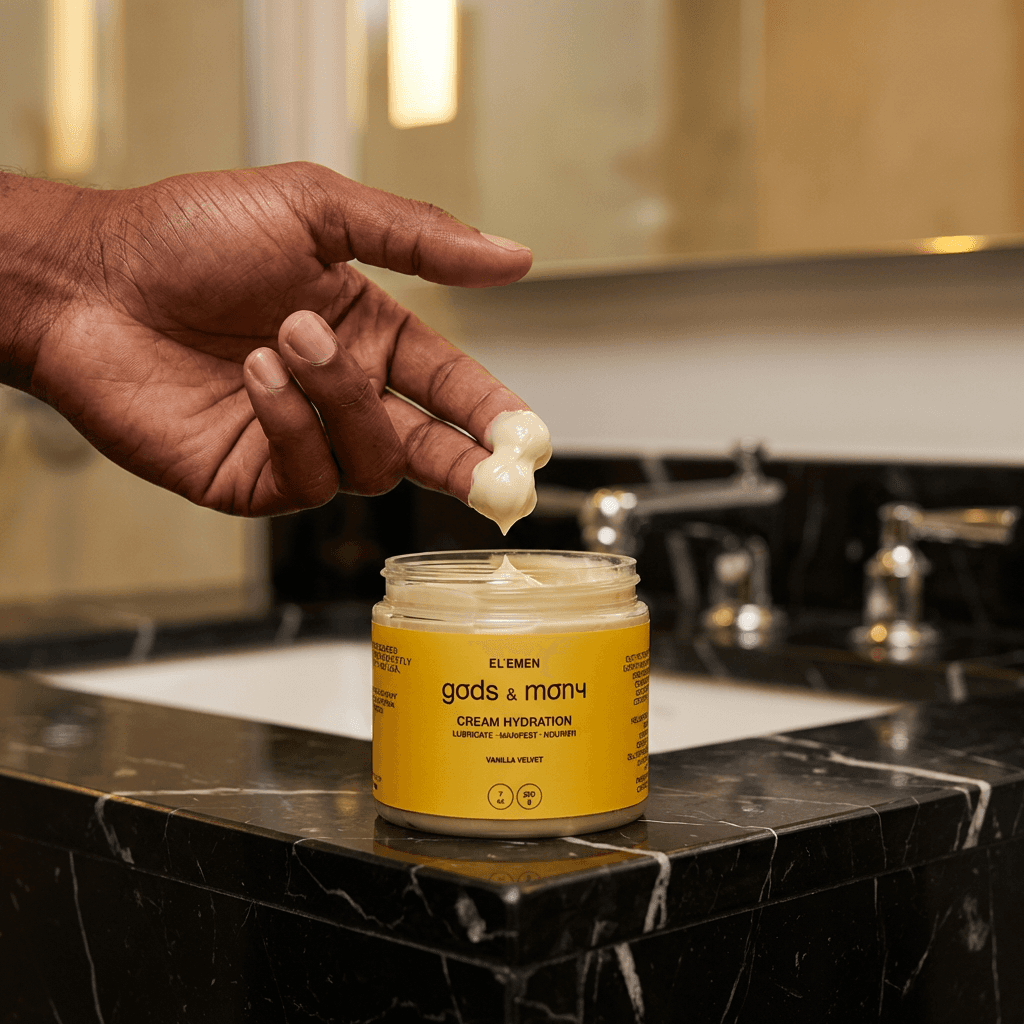
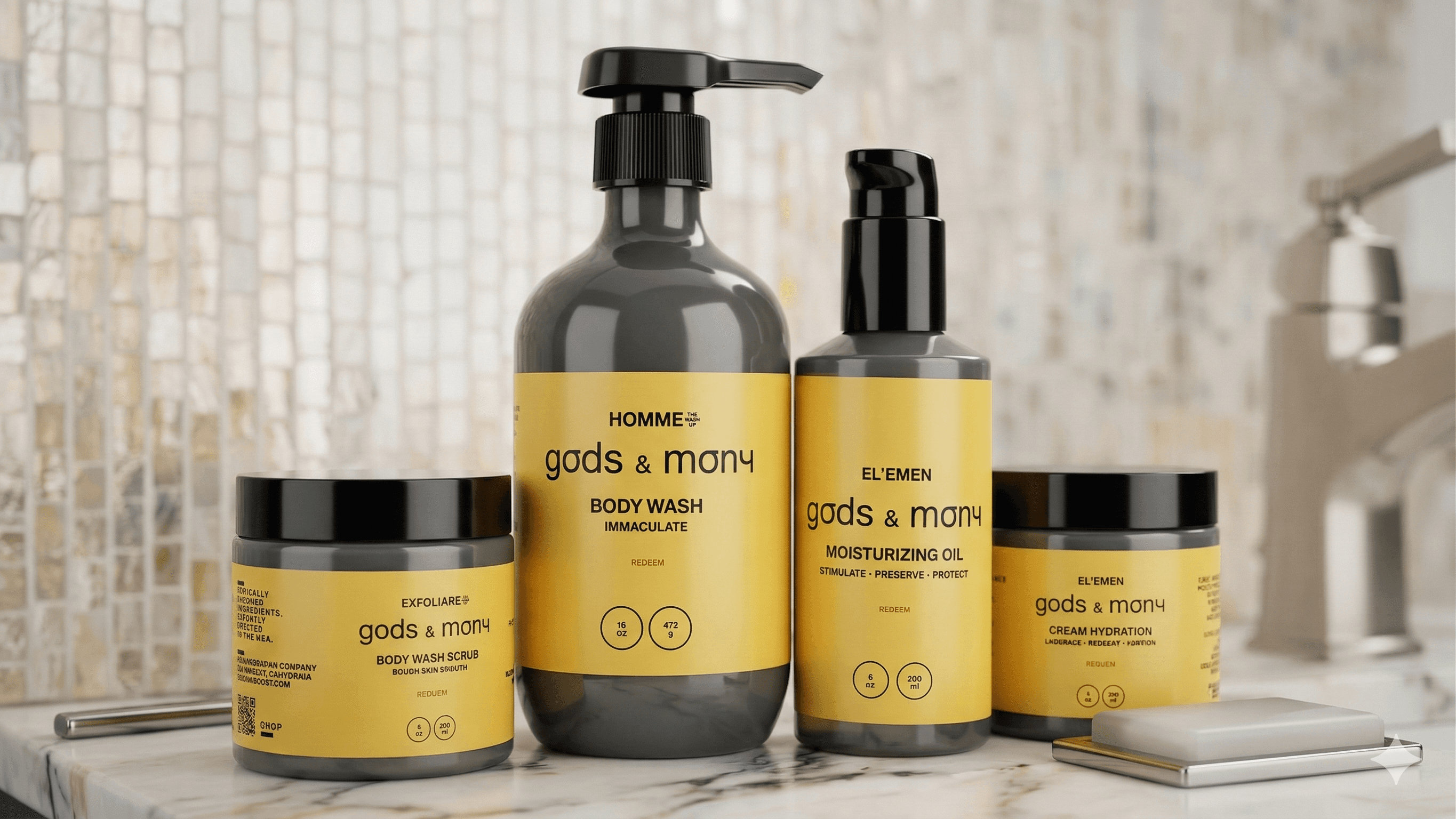
EL'EMEN Creme Hydration is built for exactly this. It hydrates without adding shine. Clean, organic, absorbs fast, leaves no residue. Apply a pea-sized amount across the full face -- nose included.
If you're still shiny 30 minutes later, use less. Or it's the wrong product entirely.
How to Get Rid of an Oily Nose: The 3-Step System
One product won't fix this. A system will.
Cleanse to remove excess sebum. Exfoliate to keep pores clear. Hydrate to prevent rebound oil. Three steps. Three minutes. Twice a day for cleansing and moisturizing, with exfoliation 2-3 times per week.
That's the standard.
Step 1: Cleanse. Twice Daily. No Exceptions.
The AAD recommends cleansing oily skin up to twice daily with a gentle, foaming cleanser. Not bar soap. Not a harsh scrub. A wash that lifts oil without destroying your skin barrier.
HOMME The Wash Up strips nothing it shouldn't. Clears everything it should. It's clean, organic, USA-made -- built for the male face. Wet your face with lukewarm water, apply a coin-sized amount, work across the nose and nasal creases for 30 seconds, rinse.
Hot water stimulates sebaceous glands. Use lukewarm.
Morning cleanse removes overnight buildup. Evening cleanse removes the day's oil, debris, and environmental residue. Miss one and you're starting the next session already behind.
Step 2: Exfoliate. 2-3 Times Per Week. Not More.
Clogged pores trap sebum. They also stretch visibly. Regular exfoliation can reduce acne incidence by up to 50% (Cosmoderma, 2024). On the nose specifically, exfoliation prevents the sebum-dead skin mix that creates dark plugs along the nasal crease.
EXFOLIARE Exfoliant clears without stripping. Apply to damp skin after cleansing. Small circles across the nose and T-zone, 20-30 seconds, rinse.
Do not exfoliate daily.
Over-exfoliation damages the barrier and triggers -- you guessed it -- more oil. If you shave, exfoliate the evening before, not the morning of.
Step 3: Hydrate. Every Single Time You Cleanse.
Every cleanse ends with moisturizer. Every one.
EL'EMEN Creme Hydration signals the sebaceous glands to ease up. It absorbs fast and leaves no residue. Apply immediately after cleansing while skin is still slightly damp.
A pea-sized amount for the full face. Don't skip the nose because it's already oily. The nose needs it most.
This three-step system attacks all three root causes: excess sebum, clogged pores, and dehydration-driven rebound oil. Each step makes the next one work better.
Citation Capsule: The AAD recommends cleansing oily skin up to twice daily with a gentle foaming cleanser, always followed by a noncomedogenic moisturizer. Regular exfoliation reduces acne incidence by up to 50%, per a 2024 national survey of dermatologists (Cosmoderma, 2024).
What Happens to Your Nose After You Shave?
Shaving creates micro-abrasions. The skin's healing response includes increased sebum production to protect the freshly exposed layer. If your nose and the surrounding area get oilier after a shave, that's exactly why.
Most men reach for an alcohol-based aftershave. Alcohol dries the skin. Dried skin triggers the same rebound oil cycle you've already read about.
: We've found this post-shave rebound is one of the most common -- and most overlooked -- triggers for midday shine in men. No guide addresses it directly. Most default to "use a mattifying primer," which treats the symptom, not the biology.
The Better Post-Shave Move
Rinse with cool water to close pores. Pat dry. Apply EL'EMEN Creme Hydration to the shaved area and nose. It calms the healing response and dials back rebound sebum.
If your skin runs especially reactive, EL'EMEN Moisturizing Oil works as a barrier layer on the jaw and neck. Keep the lighter creme on the nose.
Exfoliate the night before your shave. Not the morning of. It lifts dead skin and prep the follicles without compounding blade irritation.
Do Blotting Papers and Mattifiers Actually Work?
For about 45 minutes. That's it.
Blotting papers absorb surface oil mechanically. Mattifying primers create a silicone film that diffuses light so shine looks reduced. Neither one touches the underlying cause.
These are tools for specific moments -- a meeting, a presentation, a first date. They are not a skincare strategy. If you're reaching for blotting papers three times a day, the system above will cut that number down fast.
The goal is to reduce how much oil reaches the surface. Not to keep mopping it up after it gets there.
Does Your Diet Affect Your Oily Nose?
It plays a role. Not the lead role, but a real one.
High-glycemic diets -- white bread, sugary drinks, processed snacks -- spike blood sugar and elevate insulin-like growth factor 1 (IGF-1). IGF-1 stimulates sebaceous glands through a pathway similar to androgens. Your diet can amplify what your hormones are already doing.
Dairy is the other variable. Some research links skim milk consumption to acne severity, though the mechanism isn't fully settled yet.
The practical takeaway: if your nose is a persistent oil slick, reduce refined sugar and processed dairy for four weeks. It's a low-risk experiment.
But don't expect diet alone to solve a hormonal skin condition. The biology runs deeper than any meal plan.
: The IGF-1 pathway is why two men with identical testosterone levels can have very different skin outcomes. Diet isn't the whole equation -- but it can shift the multiplier on an already-active hormonal driver.
How Long Before You See Results?
Two to four weeks for visible change. That's the honest answer.
Skin cell turnover takes roughly 28 days. The cells being produced today won't reach the surface for about a month. Here's what the timeline actually looks like:
Week 1: Less end-of-day shine. Skin feels cleaner after washing because you're no longer stripping the barrier and triggering rebound.
Week 2: Pores on the nose look smaller as exfoliation clears the buildup. The "grimy" feeling fades.
Weeks 3-4: Oil production normalizes. Your skin finds a baseline -- enough sebum to stay healthy, not enough to create visible shine before noon.
Month 2-3: Blackheads along the nasal crease begin to clear. Skin texture evens out.
52% of US men now use facial skincare, up from 31% in 2022 (Strive Skin, 2025). The men seeing results aren't using more products. They're being consistent with fewer.
Three minutes, twice a day, beats a 20-minute deep clean once a week. Every time.
FAQ: Oily Nose in Men
Why is my nose oily but the rest of my face is dry?
That's combination skin -- the most common skin type in men. The T-zone holds 400-900 sebaceous glands per cm2 while the cheeks and jawline have far fewer (PMC12109737, 2025). Use a lightweight moisturizer everywhere. Focus exfoliation on the T-zone. Don't use a heavy cream on your nose just because your cheeks feel dry.
Not sure what your skin type is? Take the Gods and Mony Skin Quiz.
Should I use oil-free products if my nose is oily?
Yes, for the nose and T-zone. The AAD recommends "oil free" and "noncomedogenic" products for oily skin. That said, not every oil is the enemy. Lightweight botanical oils that absorb quickly don't clog pores. The problem is heavy, occlusive formulas that trap sebum. EL'EMEN Creme Hydration hydrates without adding oil.
Can a face mask help an oily nose?
Clay masks -- kaolin, bentonite -- absorb excess sebum and reduce shine temporarily. Use one once a week, max. Ten minutes, not until it cracks. Over-drying with masks triggers rebound oil production. Think of it as a supplement to your system, not a replacement for it.
Does an oily nose get better with age?
For men, not significantly. Unlike women, whose sebum levels drop after menopause, men's oil production stays relatively consistent throughout adult life (Journal of Dermatological Treatment, 2023). Your oily nose at 30 won't resolve at 50 without a routine. The upside: consistent oil production keeps your skin more hydrated and wrinkle-resistant long term.
Will washing my face more often reduce nose oil?
No. Washing more than twice daily strips the lipid barrier and triggers more sebum. The AAD recommends a maximum of two gentle cleanses per day. For midday shine management, blotting papers or a quick rinse with water -- no cleanser -- is the right move. A third wash makes it worse.
Your Routine at a Glance
Step | Product | Frequency | Time |
|---|---|---|---|
Cleanse | Twice daily | 30 seconds | |
Exfoliate | 2-3x per week | 20-30 seconds | |
Hydrate | After every cleanse | 15 seconds |
Not sure where to start? Take the Gods and Mony Skin Quiz or browse the full skincare collection.
Want the full system in one order? Check out the skincare bundles.
This Is How You Move Forward
An oily nose is not a verdict. It's a starting point.
Your skin is producing oil at a rate driven by biology, hormones, and the habits you've built -- or haven't. None of that is permanent. All of it responds to a standard.
Men who get this right don't have perfect skin. They have a system. Three minutes in the morning. Three minutes at night. Consistent. Non-negotiable.
That's the difference between a man who reacts to his skin and a man who leads it.
Read the signal. Build the standard. Show up for it every day.
Related Reading
The Complete Men's Skincare Routine (2026)
Best Moisturizer for Men: How to Choose One That Works
Men's Exfoliation Guide: How to Exfoliate Without Wrecking Your Skin
Men's Body Wash Guide: Soap vs Wash vs Scrub
Sources
PMC12109737 (2025): Sebaceous gland distribution and density across body regions. https://pmc.ncbi.nlm.nih.gov/articles/PMC12109737/
PMC5605215: "Oily Skin: A Review of Treatment Options." https://pmc.ncbi.nlm.nih.gov/articles/PMC5605215/
PMC2577631: "Patient Experiences with Oily Skin." https://pmc.ncbi.nlm.nih.gov/articles/PMC2577631/
PubMed 23279047 (2013): Effects of daily skincare habits on sebum levels and transepidermal water loss in men. https://pubmed.ncbi.nlm.nih.gov/23279047/
PubMed 8791568: Regional sebaceous gland activity and productivity on the human nose. https://pubmed.ncbi.nlm.nih.gov/8791568/
Journal of Dermatological Treatment (2023): Sex differences in sebum production across the lifespan. https://www.tandfonline.com/doi/full/10.1080/09546634.2023.2298878
American Academy of Dermatology: Oily skin care tips and moisturizing recommendations. https://www.aad.org/public/everyday-care/skin-care-basics/dry/moisturizer-oily-skin
Cosmoderma (2024): Dermatologists' Perspectives on Daily Gentle Exfoliation. https://cosmoderma.org/dermatologists-perspectives-on-daily-gentle-exfoliation-for-sensitive-and-oily-acne-prone-skin-insights-from-a-national-survey/
Persistence Market Research (2026): Men's Skincare Market by Skin Type Segment. https://www.persistencemarketresearch.com/
Strive Skin (2025): US men's facial skincare adoption rates. https://striveskin.com/
Gods and Mony Editorial
Editorial Team
Next posts