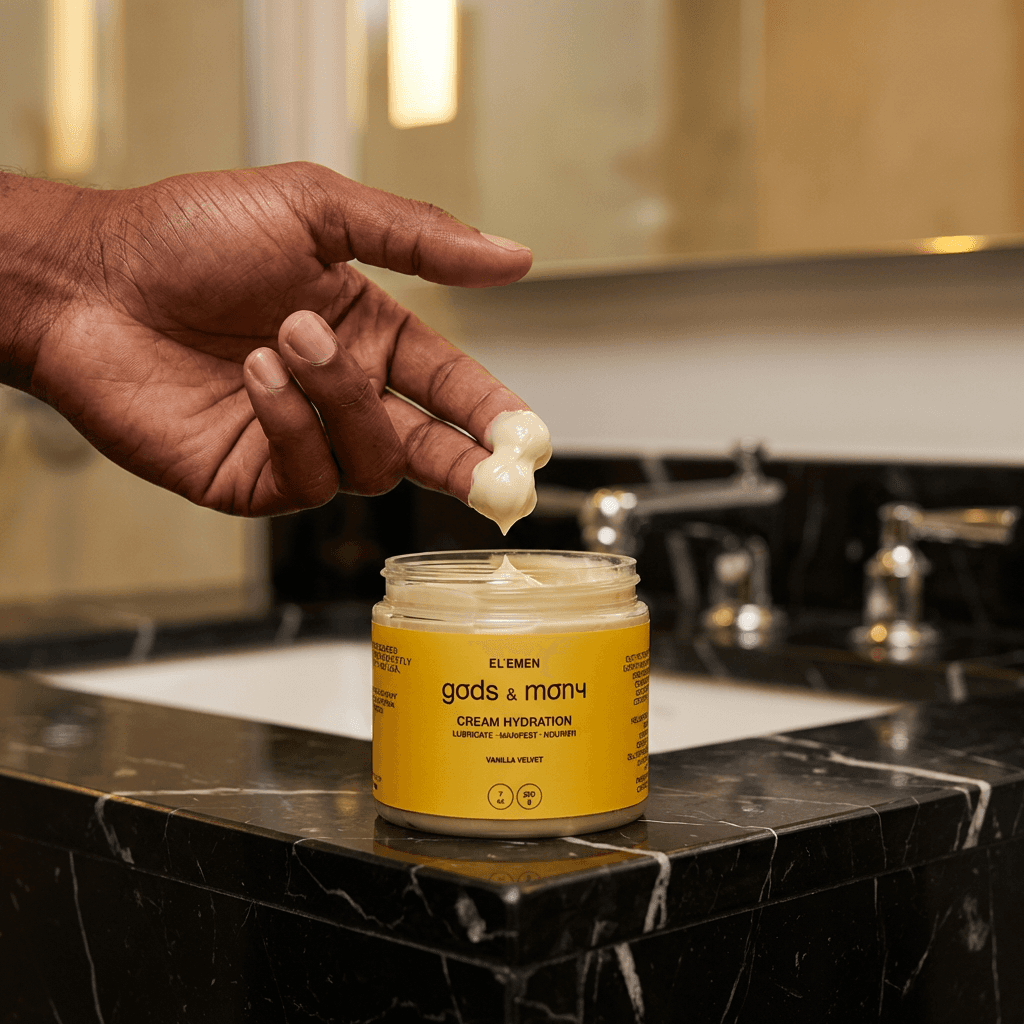
Looking expensive is a standard you keep, not a price you pay.
How to Look Expensive as a Man: The Levers That Actually Signal Wealth
15 min read
true

In This Article
Key Takeaways
Looking Expensive Is a Signal, Not a Price Tag
The Study That Ends the "You Have to Spend Money" Argument
Skin Is the Cheapest Luxury Signal You Own
The Grooming Routine That Reads as Money That polish is really one expression of a bigger idea, that presence starts with presentation, since how you present yourself is read long before any price tag is.
The Quiet-Luxury Mindset: Subtraction Over Addition
What Looking Expensive Actually Costs
Frequently Asked Questions
The Real Flex
Looking expensive has almost nothing to do with money.
That sounds like a lie the first time you hear it, because we've been trained to believe the two are the same thing — that the man who looks like money spent money to get there. But watch the men who actually read as wealthy and you'll notice something uncomfortable: most of them aren't wearing anything you could point to. No loud logo. No obvious flex. Just a kind of finish. Clean skin. Clothes that fit like they were made for the body underneath them. A calm that doesn't need to announce itself.
That finish is not purchased. It's assembled — from a small set of habits most men never think to build. And that's the good news hiding inside this whole conversation: if looking expensive were about spending, it would be locked behind a number most men can't reach. Because it's actually about legibility, restraint, and self-respect, it's available to anyone willing to be deliberate.
This is a guide to the levers that do the work. Not a shopping list. The specific, mostly-free things that make a man register as put-together, credible, and quietly well-off — and why the cheapest one you own is the one almost nobody bothers to pull.
Key Takeaways
People decide before you speak. A face is judged for trustworthiness, competence and attractiveness in 100 milliseconds — a tenth of a second — and more time doesn't change the verdict, it only makes people more confident in it (Willis & Todorov, Princeton, 2006).
Fit beats brand — this is measured, not opinion. Shown the same man in a made-to-measure vs. off-the-rack suit, with only minor tailoring changed, raters judged him more successful, higher-earning and more confident (Howlett et al., 2013).
Skin is the highest-leverage signal you own. Evenness of skin tone can account for up to 20 years of perceived age, and drives perceived health and attractiveness (Matts et al., JAAD, 2007; confirmed for male skin, Fink et al., 2012).
"Looking the part" pays in real money. Less-attractive men take roughly a 9% hit on hourly earnings; above-average men earn about a 5% premium — the durable "beauty premium" in labor economics (IZA World of Labor, 2024).
Expensive reads as restraint, not addition. The cultural swing to "quiet luxury" — understated, logo-free, well-made — sent search interest up +614% year over year at its peak and has held as a lasting aesthetic, not a fad (CNBC, 2024).
Looking Expensive Is a Signal, Not a Price Tag
Start with the brutal timeline: you are read almost instantly.
In a now-classic Princeton study, researchers Janine Willis and Alexander Todorov showed people faces for just a tenth of a second and asked them to rate trustworthiness, competence, likeability and attractiveness. Then they gave other people unlimited time to rate the same faces. The verdicts barely moved. Judgments made in 100 milliseconds correlated above 0.90 with judgments made with all the time in the world. Extra time didn't change the impression — it only made people more confident in the one they'd already formed (Willis & Todorov, 2006).
Sit with what that means. By the time you've walked into the room, said hello, and reached to shake a hand, the person across from you has already filed you. Rich or scrambling. Serious or sloppy. Worth their attention or not. You don't get to argue the case. You get to decide, in advance, what the snapshot says.
This is why "looking expensive" is worth understanding as a signal rather than a purchase. A signal is information the world reads off you before you get to explain yourself. And the men who read as expensive have learned — consciously or not — to control the signals that fire fastest: the condition of their skin, the fit of their clothes, the way they carry themselves. None of those require a large bank account. All of them require a decision.
The men who look broke while spending a fortune have it backwards. They're buying signals nobody was going to see and neglecting the ones everybody sees in a tenth of a second.
The Study That Ends the "You Have to Spend Money" Argument
If you only remember one piece of research from this article, make it this one, because it dismantles the entire premise that looking expensive costs money.
Researchers took photographs of the same man in two suits — one made-to-measure, one off-the-rack — and altered only minor details of tailoring. The faces were blanked so raters couldn't be swayed by looks, and each image was shown for a maximum of five seconds. On that flash of information alone, the man in the better-fitted suit was rated more successful, higher-earning, more confident and more flexible (Howlett et al., 2013).
Same man. Same face. Same fabric grade. The only variable was fit — and it moved how much money strangers assumed he made.
That finding isn't a one-off. A 2023 synthesis of person-perception research in Personality and Social Psychology Review concluded flatly that "dress is a fundamental component of person perception" — that what you wear, and crucially how it sits on you, shapes the status others assign you independent of price or label (Hester & Hehman, 2023).
Here's why this should change how you spend: a tailor charges less than a single mid-tier designer piece and improves everything you already own. Taking in the waist of a jacket, shortening a sleeve to break just right at the wrist, hemming trousers so they stop breaking in a puddle of fabric on your shoes — these are the cheapest upgrades in menswear, and they out-signal a logo every time. The man who spends $60 tailoring a $90 blazer will read as wealthier than the man who spends $900 on a blazer that hangs off him.
Looking expensive isn't buying more. It's making what you own fit the body it's on. Restraint over accumulation. That principle runs through everything that follows — and if you want the full argument for it, we made it in the case for old-money style and why quiet luxury beats logos.
Skin Is the Cheapest Luxury Signal You Own
Now the lever almost every "how to look rich" guide skips, because it doesn't photograph well on a mood board: your skin.
The research here is remarkable. In a study published in the Journal of the American Academy of Dermatology, scientists found that the evenness of skin coloration — how uniform the tone is, versus blotchy, ruddy, or marked by dark patches — could account for as much as 20 years of perceived age. Homogeneous skin was rated as younger, healthier and more attractive, with correlations above 0.40 across all three (Matts et al., 2007). A follow-up confirmed the same effect holds specifically for male skin (Fink et al., 2012).
Read that again with the 100-millisecond study in mind. Two of the fastest, most durable things a stranger judges about you — your age and your health — are being read largely off the surface of your skin. Not your watch. Not your car. Your skin. And unlike your jawline or your height, the evenness and condition of your skin is something you can genuinely change.
This is also where "looking the part" stops being vanity and starts being economics. The beauty premium is one of the most replicated findings in labor economics: less-attractive men incur roughly a 9% penalty on hourly earnings, while above-average-attractiveness men earn about a 5% premium (IZA World of Labor, 2024). Newer work tracking MBA graduates over 15 years found attractive men earned a durable premium worth thousands per year, largest in socially interactive fields like management and consulting (INFORMS, 2024). "Attractive," in most of these studies, is not bone structure — it's the controllable stuff. Grooming. Skin. Presentation.
You cannot buy a new face. You can absolutely buy back years of perceived age and health with a skincare routine that costs less per month than a couple of restaurant drinks. That is the highest return-on-effort move in this entire article, and it's the one most men refuse to make because they still think caring for their skin is somehow unmasculine. It isn't. It's the single most efficient status upgrade available to you.

The Grooming Routine That Reads as Money
Here's the practical translation. Looking expensive at the level of skin comes down to four moves, done consistently. Not a fourteen-step regimen. Four.
One: get genuinely clean. Expensive-looking skin starts with a real wash, not a bar of whatever's in the shower. A proper body and skin wash clears the sweat, grime, and dead surface cells that dull your tone and clog pores. This is the floor, and it's why we built HOMME The Wash Up as a clean, organic wash that respects the skin instead of stripping it — the daily reset the rest of the routine sits on top of.
Two: exfoliate to even the tone. Remember the research: evenness is the signal. Dead skin buildup, rough patches and uneven texture are exactly what read as older and more neglected. Exfoliating two or three times a week is how you fight the blotchiness that ages you. EXFOLIARE Exfoliant is made to lift that dead layer without the harsh scrub-burn that leaves skin raw and red — smoother texture, more uniform tone, which is precisely what the studies tie to looking younger and healthier.
Three: hydrate so skin looks lit from within. Dry skin looks tired, dull and flat; well-hydrated skin has the faint luminosity people unconsciously read as "healthy" and "young." A daily moisturizer like EL'EMEN Creme Hydration keeps the surface supple and even, and for the finish that actually catches light, a few drops of EL'EMEN Moisturizing Oil gives skin the low, expensive sheen that no amount of clothing can fake.
Four: keep the edges clean. A sharp, intentional hairline, groomed brows, trimmed nails, tended hands. The rich-looking man is not necessarily better-looking — he's better-maintained. Maintenance is a signal of self-respect, and self-respect is what "expensive" actually means to the eye.
If you're not sure where your skin sits or which of these to prioritize, our skincare collection is built around exactly this sequence, and the two-minute skin quiz will point you to the right starting product. And if you want the full daily framework rather than the highlights, we laid it out step by step in the men's skincare routine guide.
The whole routine takes under five minutes a day. That's the entire price of admission to the most valuable signal in the room.
The Quiet-Luxury Mindset: Subtraction Over Addition
Now the part that's harder than any product, because it's a mindset: expensive looks like less, not more.
The culture has already turned this way. When understated wealth became the aesthetic of the moment, search interest in "quiet luxury" spiked +614% year over year, with "stealth wealth" and "old money style" climbing even harder — and rather than fading, it settled in as a durable way men want to present themselves (CNBC, 2024). The whole point of the look is that it removes the shouting. No logos. No neon. No trying-too-hard. Just quality, fit, and restraint.
There's a reason the genuinely wealthy so often dress this way. Loud signaling is what you do when you need strangers to know something they might otherwise doubt. Quiet signaling is what you do when you don't. The man in the plain, perfectly-fitted charcoal coat isn't hiding money — he's demonstrating that he has nothing to prove. And that ease, that lack of effort-to-impress, is itself one of the fastest-read markers of status there is.
So the mindset move is subtraction. Fewer pieces, better chosen. A tighter color palette — navy, charcoal, cream, camel, black — that always coordinates so you never look like you got dressed in the dark. One good watch instead of three cheap ones. Clothes without visible branding. Grooming that looks like health rather than product. Every time you're tempted to add something to look richer, ask whether removing something would do it better. It usually will.
Expensive men edit. Everyone else accumulates.
What Looking Expensive Actually Costs
Let's be honest about the real price, because it isn't zero — it's just not measured in dollars.
Looking expensive costs attention. It costs the five minutes a day on your skin when you'd rather skip it. It costs the trip to the tailor with clothes you already own. It costs the discipline to buy less and choose better, to leave the loud thing on the rack, to keep the routine going on the days no one's watching. It's not a purchase. It's a standard you hold yourself to, repeated until it becomes how you look by default.
And that's exactly why it works as a signal. The 100-millisecond judgment isn't fooled by a one-off. It reads the accumulation — the skin that's been cared for consistently, the habits that have compounded into a finish. You cannot cram for it the morning of. The man who looks expensive on Tuesday looked after himself on all the Sundays no one saw.
This is the quiet argument underneath the whole Gods and Mony project, and you can read more about what we're actually building: that grooming isn't grooming. It's the daily, visible proof that a man holds himself to a standard. The clean skin is the evidence. The restraint is the tell. The consistency is the flex. Money can buy the props, but it cannot buy the maintenance, and it's the maintenance that everyone can see.
You don't need a bigger budget to look like the most expensive man in the room. You need a smaller list of things you refuse to skip.
Frequently Asked Questions
How can a man look expensive on a budget? Focus on the levers that don't cost much and signal the most: clean, even, well-hydrated skin (a simple wash–exfoliate–moisturize routine), clothes that fit (a tailor beats a logo — the research shows minor tailoring alone raised how much money strangers assumed a man earned), a tight neutral color palette, and grooming that reads as maintenance. None of these require designer spending. The most expensive-looking thing you can do is take care of the skin everyone sees in the first tenth of a second.
Does skincare really make a man look richer? Indirectly, yes. Skin condition is one of the fastest things people judge, and evenness of skin tone can account for up to 20 years of perceived age while driving perceived health and attractiveness (Matts et al., 2007). Since "younger, healthier, well-maintained" is exactly what the eye reads as high-status, a consistent skincare routine is one of the highest-return moves for looking put-together — far more visible than most clothing purchases.
What makes clothing look expensive if it's not the brand? Fit, first. In a controlled study, the same man in a better-fitted suit was rated more successful and higher-earning than in an off-the-rack one, with only minor tailoring changed (Howlett et al., 2013). After fit comes restraint: quality fabrics in neutral colors, no visible logos, and a coordinated palette. Expensive reads as understated, not loud — that's the entire logic of quiet luxury.
Is looking expensive actually worth the effort? By the numbers, yes. The "beauty premium" in labor economics is durable: less-attractive men lose roughly 9% in hourly earnings while above-average men gain about 5% (IZA World of Labor, 2024), and most of what raters score as "attractive" is the controllable stuff — grooming, skin, presentation. Looking after how you present isn't vanity; it measurably shapes how people treat you and what they assume you're worth.
Where should I start if I only change one thing? Your skin. It's the highest-leverage, most-visible signal and the cheapest to improve. Start with a real daily wash, add exfoliation two to three times a week to even your tone, and moisturize so skin looks healthy rather than dull. Our skincare collection is sequenced for exactly that, and the skin quiz will tell you where to begin. Build that habit first — it compounds faster than anything else on the list.
The Real Flex
Looking expensive was never about the money. It's about the maintenance.
The man who reads as wealthy isn't the one who spent the most. He's the one who decided, quietly and repeatedly, that he was worth taking care of — and then actually did it, on the ordinary days when no one was keeping score. Clean skin. Clothes that fit. A palette that never shouts. The calm of a man with nothing to prove.
That's a standard, not a purchase. And a standard is available to you starting tomorrow morning, in the five minutes most men give away.
Command the room by looking like you belong in it. Not because you bought your way there — because you built it, one unremarkable day at a time.
Gods and Mony Editorial
Editorial Team
Next posts