Composure is the loudest thing in the room. Here's what the stoic man knows.
The Stoic Man: Why Composure Is The Last Real Status Symbol
19 min read
2026-05-24
In This Article
Key Takeaways
What A Stoic Man Actually Is
Why Men Are Rushing Back To It
The Four Virtues, Decoded For 2026
Where Composure Gets Built: The Morning
Composure In The Mirror: Grooming As A Stoic Ritual
The Trap: Stoicism vs Suppression
How A Stoic Man Carries Himself
Stoicism In Relationships
The Stoic Manifesto
Frequently Asked Questions
The Stoic Man: Why Composure Is The Last Real Status Symbol
Walk into any room in Los Angeles right now and you'll find ten men trying to be heard.
They're loud. They're posturing. They're name-dropping. They're laughing too hard at their own jokes and checking the room to see who noticed.
And then there's one man at the end of the bar. Doesn't raise his voice. Doesn't move much. Doesn't have to.
The room moves toward him.
That's the stoic man. Not the suppressed one. Not the cold one. The composed one. The one who knows that the loudest voice in the room is usually the most uncertain. And that in a culture built for reaction, the man who refuses to react owns the room.
This isn't a personality. It's a practice. And it's the last real status symbol left.
Key Takeaways
Stoicism has surged. Reddit and X have reported a 400 percent growth in Stoicism-related content, according to Psychology Today. Sales of Marcus Aurelius's Meditations went from 12,000 copies in 2012 to 100,000 in 2019. Men are looking for something the algorithm can't give them.
Men gravitate to it. Research found men are over twice as likely as women to fall into the top quartile of stoic ideology, per a PMC validation study. The pull is real. The question is whether you practice the real thing or the bro version.
Composure is measured in milliseconds. Princeton research shows people form impressions in less than 1/10th of a second based on posture, gaze, and movement. The stoic man wins the room before he says a word.
The body funds the mind. 80% of Fortune 500 CEOs exercise before work, and the science explains why: morning exercise boosts BDNF by 32% and lowers cortisol by 20% for up to 12 hours. Composure isn't a vibe. It's a physical state you build.
Pop-stoicism kills men. A 2025 Movember Institute survey found young men consuming "masculinity influencer" content reported higher rates of emotional distress, worthlessness, and sadness. Real stoicism is regulation. Fake stoicism is suppression. One builds presence. The other builds resentment.
What A Stoic Man Actually Is
Let's clear something up.
A stoic man is not the guy who feels nothing. He's not the guy who stares into the middle distance and refuses to laugh. He's not the Andrew Tate cosplay. He's not the LinkedIn philosopher quoting Marcus Aurelius between hustle posts.
A stoic man is a man who feels everything and acts on what's worth acting on.
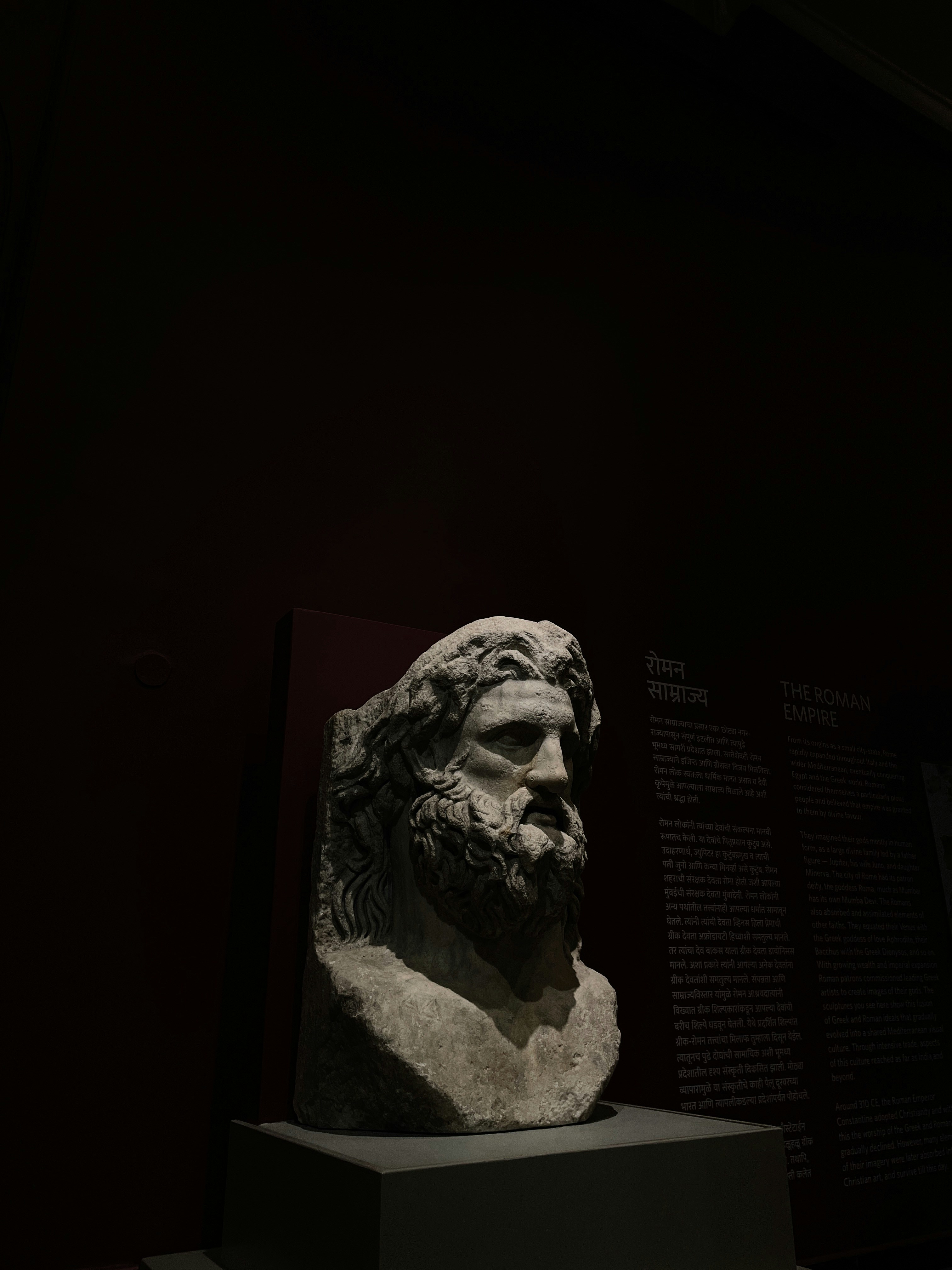
The original Stoics — Marcus Aurelius, Seneca, Epictetus — weren't writing self-help. They were writing for emperors, slaves, exiles, soldiers. People who had to function under the worst circumstances a human can face and still make decisions that didn't ruin themselves or the people around them.
What they figured out was simple. You don't control the world. You control your response to it. And the only thing in your life that compounds — for or against you — is what you choose to do with the gap between what happens and what you say next.
The stoic man widens that gap.
The reactive man doesn't have one.
And in a culture engineered to shrink that gap to zero — push notifications, takes, dopamine loops, comment sections — the man who keeps his gap intact is the man who keeps his life intact.
Why Men Are Rushing Back To It
The numbers are loud. The USC Dornsife reporting traced sales of Meditations climbing nearly tenfold across the 2010s. YouTube channels devoted to "Modern Stoicism" have millions of subscribers. Silicon Valley founders quote Epictetus. Athletes carry Seneca on the plane.
It's not nostalgia. It's a vacuum.
Men today are told two things at once. They're told to suppress everything — be tough, don't complain, don't ask for help. And they're told to feel everything — process, share, post, monetize the pain. Both modes burn out. One gives you a heart attack at 45. The other gives you a comment section addiction.
Stoicism offers a third lane. It's not "feel less." It's not "feel more for the camera." It's "feel it, name it, decide what to do with it, and move."
That's why men gravitate to it. The data backs it up — a peer-reviewed study developing the Pathak-Wieten Stoicism Ideology Scale found men over twice as likely as women to land in the top stoic-ideology quartile. The hunger is there. The practice is not always.
Most men who say "I'm stoic" mean "I'm shut down." That's not stoicism. That's just being a wall.
The stoic man is the opposite of a wall. He's a door. He decides what gets through.
The Four Virtues, Decoded For 2026
The Stoics taught four virtues. Wisdom. Courage. Justice. Temperance.
Read those four words again. They sound like a museum plaque. They're actually a daily operating system.
Wisdom. Knowing the difference between what you control and what you don't. You don't control the market, the woman, the boss, the weather, the news cycle, the timeline. You control your decision in the next 60 seconds. The wise man stops grieving things outside the gate and starts working on things inside it.
Courage. Not the chest-beating kind. The boring kind. The kind that says the hard thing in the meeting. That closes the laptop and works out. That admits the mistake. That asks the question. That sits with the discomfort instead of numbing it. Courage is mostly small and unsexy. It compounds.
Justice. Not the courtroom version. The mirror version. Treating people the way you'd want your mother, your son, or a stranger watching you to see treated. The stoic man is the same man behind closed doors as in the boardroom. The integrity tax is paid daily, in private.
Temperance. This is the one that built the West and the one the internet is trying to destroy. Restraint. Knowing when to stop. The fifth drink. The third scroll. The argument you could win but shouldn't have. The reply you don't send. The stoic man is the man who can.
These aren't decorations. They're the four legs of the chair you sit in when life gets heavy. Knock one out and the chair tips.
Where Composure Gets Built: The Morning
You don't become composed when the moment requires it. You become composed in the hour nobody is watching you.
The data is clear. Industry Leaders Magazine reports that 80% of Fortune 500 CEOs exercise before work, 60% practice some form of mindfulness or journaling, and CEOs who plan their morning complete 40% more strategic work while spending 35% less time on low-value tasks.
This is not a productivity hack. It's a stoic ritual in modern clothes.
The stoic morning isn't about wake-at-4 hustle worship. It's about claiming the first hour for yourself before the world claims you. The man who hands his first hour to his phone has already lost the day. The man who hands it to himself starts the day already ahead of everyone he'll meet.
Here's what the stoic morning actually looks like for a man who isn't a monk and isn't a CEO and just wants to be steady:
No phone for the first 30 minutes. Your nervous system doesn't need a doomscroll before it has a chance to wake up.
Movement. Even ten minutes. Push-ups in the bathroom. A walk around the block. Cold water on the face. The body needs to know the day is on. Research from CEO morning studies shows morning exercise boosts BDNF — the brain growth factor that sharpens memory, learning, and decision-making — by 32%, and lowers cortisol by 20% for the next twelve hours. You are buying composure for the day with sweat.
Water before caffeine. Hydrate the system. Then stimulate it.
The shower as a ritual, not a chore. This is where most men sleepwalk through the most underrated five minutes of their day. The stoic man doesn't. He uses HOMME The Wash Up the way a soldier checks his rifle — quietly, deliberately, with the understanding that the small acts of self-respect are what carry the big ones. Clean organic skin wash, made in USA, no chemicals dragging the body down. The shower is where the day's first decision is made: am I taking care of the man who has to carry this day? Or am I just rinsing off?
Two or three minutes of grooming with attention. Not vanity. Inventory. You look at the man in the mirror and you confirm he's the one you're sending into the world today. You moisturize. You smell good. You leave the bathroom as a man other people can be in a room with.
This is the stoic gap. The 30 to 45 minutes between alarm and inbox where you become the man who is going to handle whatever the day throws.
You can't think your way into composure at 2pm if you didn't build it at 7am.
Composure In The Mirror: Grooming As A Stoic Ritual
Here's a truth most men miss.
The Stoics weren't slobs. Marcus Aurelius wrote about taking care of himself the way a man takes care of a horse he depends on. The Roman emperors didn't roll out of bed and into power. They bathed, they trained, they oiled, they presented.
Self-care wasn't soft. It was preparation.
That gets lost in the modern stoic LARP, where guys think being a stoic man means looking dusty and acting like they don't care. They care. They just don't know how to put care into a body that's going to carry their ambition.
The stoic man treats grooming the way a samurai treated his sword. It's not vanity. It's readiness.
This is where Gods and Mony was built. Clean, organic, USA-made grooming for the man who isn't trying to smell like a teenager or pretend the body doesn't matter. The full ritual is four products, four minutes, every morning:
HOMME The Wash Up is your skin wash. Clean. Organic. Made in Los Angeles. It removes the night, the sweat, the build-up, without stripping the man underneath. The stoic doesn't fight his skin. He cleans it and moves on.
EXFOLIARE Exfoliant is the discipline tool. Two to three times a week. Sloughs off dead skin, opens the pores, makes everything else work. You can't apply hydration to a man wearing yesterday on his face.
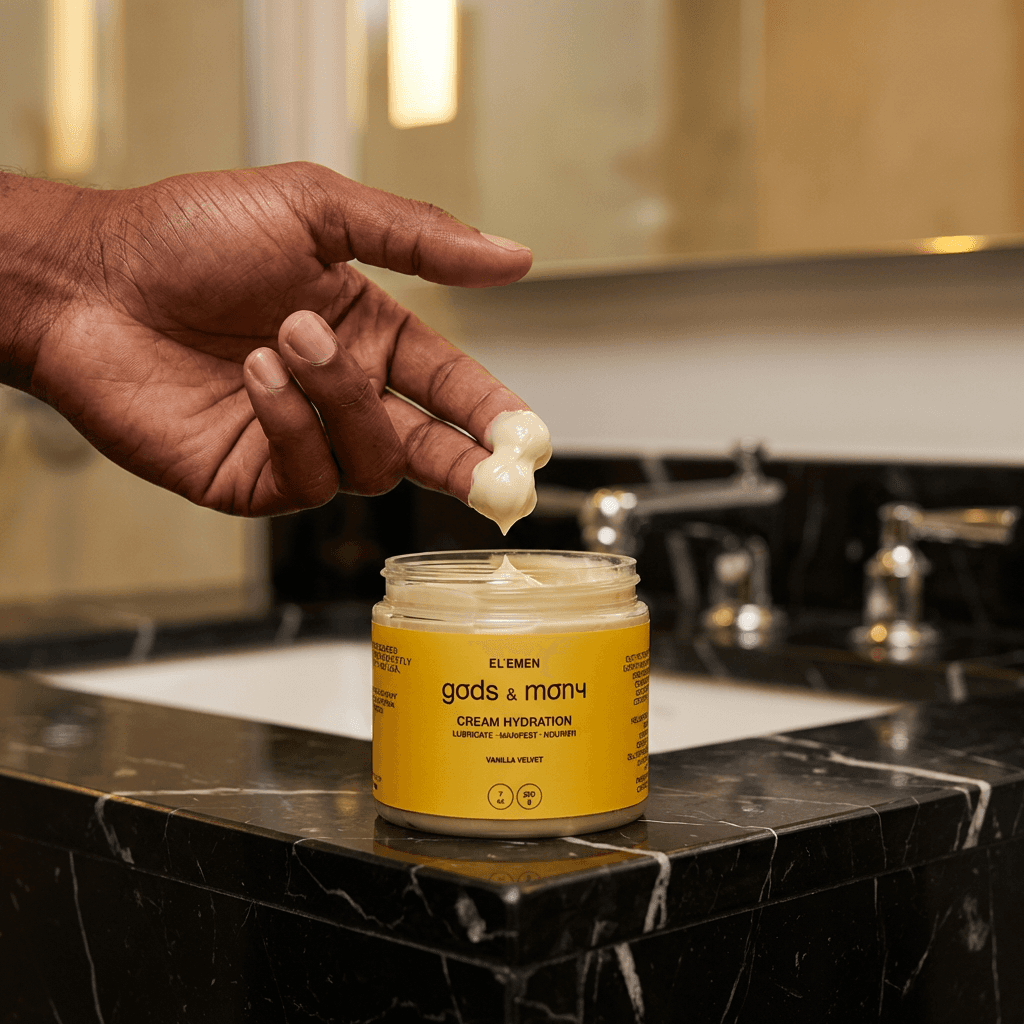
EL'EMEN Creme Hydration is the daily cream. After the wash. Locks in moisture. Builds the barrier. The stoic skin is not dry skin. Dry skin reads as a man who's not eating, not sleeping, not paying attention. The hydrated man reads as a man who has his life in hand.
EL'EMEN Moisturizing Oil is the closer. A few drops. Massaged into the face and beard if you wear one. This is the move that separates the man who grooms from the man who showers. The skin softens. The light catches it differently. You look like a man who chose to be there.
If you want a guide that picks the right combination for your skin, take the skincare quiz. Four questions, honest answers. Or browse the full skincare collection and build the ritual yourself.
This is the part most "stoic" content misses. The body is the temple, yes. But it's also the storefront. The stoic man maintains it because how he treats himself behind closed doors is the model for how he expects the world to treat him.
You don't have to spend an hour. You spend four minutes a day. And those four minutes change the man who walks into every other minute.
The Trap: Stoicism vs Suppression
This is the part the internet gets wrong on a daily basis.
Big Think calls it "naive stoicism" — the version where men think the practice means feeling nothing, saying nothing, swallowing it all and grinding. That's not stoicism. That's a heart attack with a marketing budget.
And the data is now catching up to the cost. The 2025 Movember Institute survey found that young men 16 to 25 who consume online "masculinity influencer" content report higher rates of emotional distress, feelings of worthlessness, nervousness, and sadness. The version of manhood being sold on those feeds isn't making men stronger. It's making them sicker.
Real stoicism is the opposite of suppression. It's regulation.
Suppression says: I won't feel that. Regulation says: I feel that. I see it. I name it. I decide what it deserves.
That distinction matters because suppression compounds into something psychologists call alexithymia — the inability to identify or describe what you feel. A 2025 Springer study found that masculine norms can create a feedback loop where emotional control fosters alexithymia, which then cancels out the protective benefits men thought they were getting from being "tough."
You can be tough and emotionally literate. They're not in tension. The strongest men in your life — the ones who walked through divorce, layoffs, loss, betrayal — are the ones who can name what they're feeling without being run by it.
The fact that cognitive behavioral therapy — the most evidence-backed mental health framework of the last 50 years — was directly inspired by Stoic philosophy is not a coincidence. CBT founder Aaron Beck said it himself: "I was influenced by the Stoic philosophers." The stoics figured out 2,000 years ago what modern psychology is now charging $250 an hour to relearn.
Feel it. Name it. Decide. Move.
That's the loop.
How A Stoic Man Carries Himself
The body tells before the mouth does.
Princeton research showed people form impressions in less than 1/10th of a second based on posture, gaze, and movement. Before you've said a word, you've already cast the role you're going to play in the room.
The stoic man knows this. So he runs an inventory before he walks in.
Posture. Spine stacked. Shoulders down and back. Not military, not stiff — but not collapsed either. The collapsed body broadcasts a collapsed mind. Most men carry their phones in their posture without realizing it.
Eyes. Stoic eyes don't dart. They land. The reactive man scans the room for threats and approval. The stoic man sees one thing at a time and stays with it. Hold eye contact half a second longer than you think you should. Watch the room shift.
Speed. Stanford and Toronto research keeps confirming the same thing — the most charismatic people speak lower and slower than average. The hurried voice broadcasts a hurried life. The slow voice broadcasts a man who knows the meeting isn't going anywhere without him.
Stillness. Hands quiet. No fidgeting. No flicking the watch. The man who doesn't need to occupy himself with motion is the man who has somewhere to put his attention.
University of Toronto research found the most charismatic people show high emotional expressiveness combined with strong emotional control. Read that twice. They are not muted. They are not flat. They feel a lot — and they decide how much of that feeling becomes visible. That's the stoic man on the outside.
Composure is a skill. Like a deadlift, like a swing. You practice it in the gym of small moments — the slow morning, the held gaze, the unhurried sentence — so it's there when the big moment needs it.
Stoicism In Relationships
This is where most "stoic" content collapses.
The bro version of stoicism is a relationship killer. Don't show emotion. Don't be vulnerable. Don't communicate. Just lift weights and brood. Six months in, your partner is exhausted, your friendships are surface, and your kids think Dad is the person who tells them not to cry.
That's not a man. That's a fortress with no door.
The real stoic man is the one who can sit with his partner's hardest day and not flinch. Not fix it. Not minimize it. Not panic. Just be there — solid, steady, present. He's the friend who shows up when the call comes at 11pm and doesn't make it about him. He's the father who can be sad in front of his son and explain why, and show the boy that sadness isn't weakness — it's data.
The stoic man's gift to the people he loves is the same gift he gives himself. He widens the gap between what happens and what he says next. So they don't have to walk on eggshells. So they can bring him the real thing.
That's the difference between a man who's emotionally regulated and a man who's emotionally absent. One is a foundation. The other is a vacancy with a body in it.
The Stoic Manifesto
If you want a single page to come back to, here it is.
A stoic man controls his response, not the world.
A stoic man feels everything and acts on what's worth acting on.
A stoic man holds the gap. Between what happens and what he says next.
A stoic man's body is his first investment. He moves it. He cleans it. He maintains it. He doesn't leave the house as a half-version of himself.
A stoic man's morning is his own. The first hour goes to the man, not the feed.
A stoic man speaks lower. Slower. Less.
A stoic man treats grooming as readiness, not vanity. The man in the mirror is the man he's sending into the world today. He sends a good one.
A stoic man doesn't perform composure. He builds it in private, every day, in rituals nobody sees.
A stoic man feels his anger and decides whether it deserves a response. Most of the time it doesn't.
A stoic man is present. With his partner. His kids. The man across the table. He doesn't half-listen with one eye on his phone.
A stoic man pays his integrity tax in private. He's the same man behind closed doors as in the boardroom.
A stoic man doesn't suppress. He regulates. There's a difference and it matters.
A stoic man is the loudest thing in the room without raising his voice.
That's the practice. Start today.
Frequently Asked Questions
What does it mean to be a stoic man in 2026?
A stoic man in 2026 is a man who feels everything but acts on what's worth acting on. He practices emotional regulation, not suppression. He controls his response to the world instead of trying to control the world. He treats his body, his morning, and his rituals as the foundation for composure under pressure. He is the man who widens the gap between what happens and what he says next, and in a culture engineered to shrink that gap to zero, he holds it intact.
Is being stoic the same as being emotionless?
No. This is the most damaging misconception about modern stoicism. The original Stoics — Marcus Aurelius, Seneca, Epictetus — taught emotional regulation, not emotional suppression. The stoic man feels everything. He just decides what each feeling deserves before reacting. Suppression compounds into alexithymia and emotional shutdown. Regulation compounds into presence. The strongest men you know are not numb. They are composed.
How do I start practicing stoicism as a man?
Start with the morning. Claim the first 30 to 45 minutes for yourself — no phone, water before caffeine, movement, and a deliberate grooming ritual using clean products like HOMME The Wash Up and EL'EMEN Creme Hydration. Then practice the gap during the day — pause one breath before responding to anything that triggers you. Read 10 minutes of Marcus Aurelius's Meditations at night. That's it. Composure compounds.
What's the difference between stoicism and toxic masculinity?
Toxic masculinity tells men to feel nothing, communicate nothing, and grind until something breaks. Stoicism teaches men to feel everything, name it accurately, and decide what to do with it. The 2025 Movember Institute survey confirmed young men consuming "alpha male" influencer content report higher rates of emotional distress. Real stoicism is the opposite — it's the framework that produced cognitive behavioral therapy, the most evidence-backed mental health practice in modern psychology.
Can grooming and self-care be part of being a stoic man?
Yes — and the Stoics themselves practiced it. Marcus Aurelius and Seneca both wrote about caring for the body as preparation, not vanity. The stoic man maintains his body the way a samurai maintained his sword. A clean, considered grooming ritual — face wash, exfoliation twice a week, moisturizer, oil — takes four minutes a day and signals a man who has his life in hand. The Gods and Mony bundles give you the full ritual in one stack.
Which Gods and Mony products fit the stoic morning ritual?
Four products carry the morning:
HOMME The Wash Up — daily skin wash, organic, made in USA.
EXFOLIARE Exfoliant — two to three times a week, removes dead skin and lets everything else work.
EL'EMEN Creme Hydration — daily moisturizer, locks in hydration.
EL'EMEN Moisturizing Oil — a few drops to finish, the move that separates the man who showers from the man who grooms.
Not sure where to start? Take the skincare quiz or read more about the brand.
The stoic man is not the man who feels nothing. He's the man who feels everything and refuses to be run by it.
In a world that monetizes your reaction, your composure is the rebellion.
In a culture that confuses volume with value, your stillness is the statement.
Walk into the room slow. Speak lower. Hold the gaze. Build the body. Run the ritual. Pay the integrity tax in private.
The room knows.
The room has always known.
Read more: How to be charismatic · Morning routine for success · What makes a man attractive · High value man

Gods and Mony Editorial
Editorial Team
Next posts