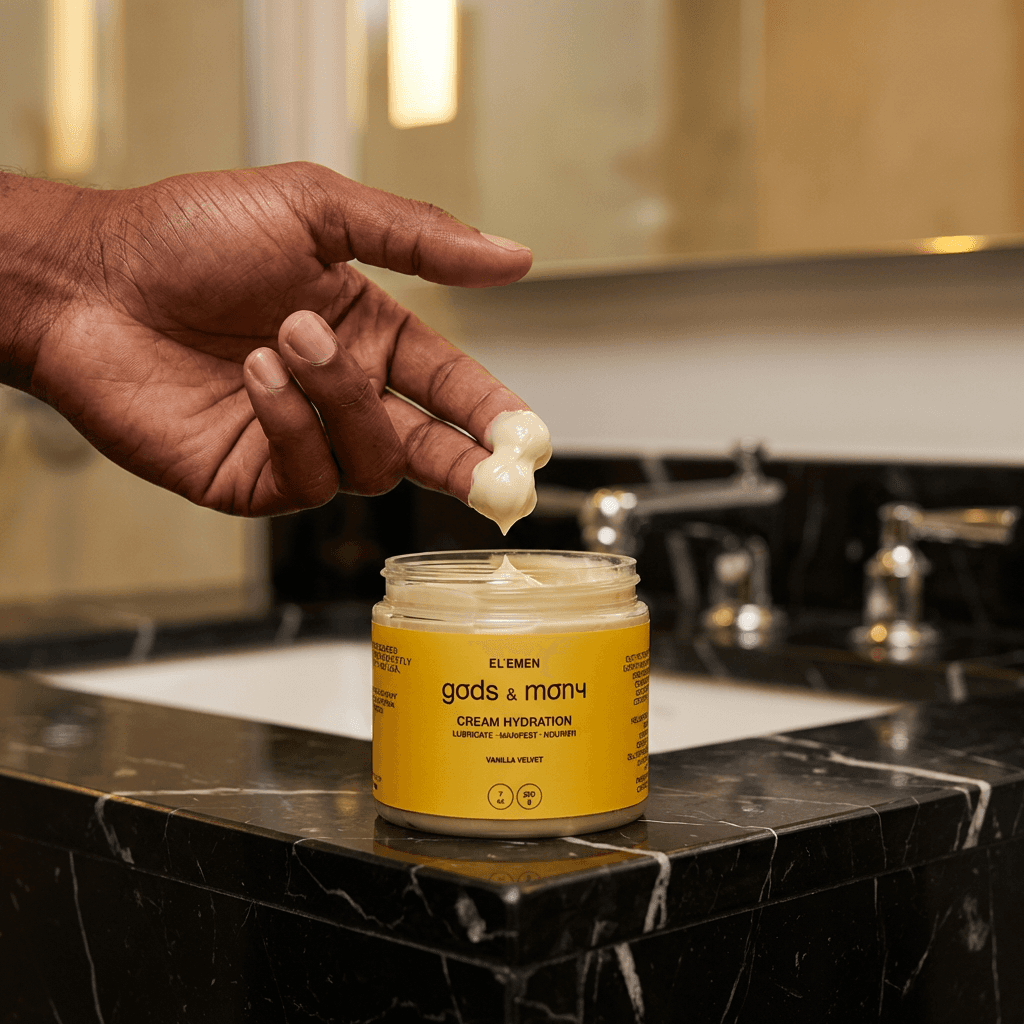
The small rituals are what hold two people together.
Couples Self Care Routine: How To Build A Ritual That Keeps You Close
17 min read
2026-06-17

In This Article
Key Takeaways
The Drift Is Real, And The Data Proves It
Why Turning Toward Each Other Beats Date Night
The Difference Between A Routine And A Ritual
Touch Is The Language Underneath The Words
The Most Underrated Room In Your Relationship Is The Bathroom
How To Build It So It Actually Lasts
If You're The One Buying This For Him
FAQ
The Drift Is A Choice. So Is The Closeness.
Couples Self Care Routine: How To Build A Ritual That Keeps You Close
Relationships don't usually end in a fight. They end in a drift.
Nobody slams a door. There's no betrayal, no blowup, no single moment you can point to. Two people just get busy, then tired, then efficient. The conversation shrinks to logistics. The evenings turn into two phones glowing in the same dark room. And one day you look up and realize you're roommates who used to be in love, sharing an address and a calendar and not much else.
That drift isn't a sign you picked the wrong person. It's a sign you stopped doing the small, deliberate things that keep two people pointed at each other. Connection isn't a state you arrive at once and keep forever. It's a practice. It runs on repetition, on tiny moments of attention repeated until they become the texture of a life shared.
A couples self care routine is one of the most underrated ways to build that practice in. Not a spa day you take twice a year. Not a grand gesture. A small, shared ritual you run together often enough that it becomes part of who you are as a pair. The couples who stay close don't have more time or fewer problems. They just keep turning toward each other, on purpose, in ordinary ways, long after the early thrill wore off.
This is how you build that ritual, and why it works.
Key Takeaways
We are in a connection crisis, and couples feel it too. 57% of Americans report being lonely, and the APA now calls 2025 "a crisis of connection," with 1 in 3 adults feeling lonely every week (APA). Closeness has to be built on purpose now, not assumed.
Turning toward each other is the single biggest predictor of staying together. In Gottman's research, couples who lasted turned toward each other's small bids for connection 86% of the time, versus 33% for couples who later divorced (The Gottman Institute). A shared daily ritual is a structure that forces those moments to happen.
A ritual beats a routine because of shared meaning. Harvard research found the relationship benefit comes only when both partners see the activity as a meaningful ritual, not just a task you happen to do near each other (Harvard Business School).
Touch is the language underneath the words. Affectionate touch measurably lowers stress and raises oxytocin and happiness (eLife). A shared care ritual builds gentle, regular touch into the day without anyone having to ask for it.
The bathroom shelf is the easiest place to start. With 68% of Gen Z men now using facial skincare, up from 42% in 2022 (Glossy), a shared grooming ritual built on a simple set like HOMME The Wash Up and EL'EMEN hydration is the lowest-friction couples ritual there is.
The Drift Is Real, And The Data Proves It
Start with the thing nobody wants to admit: most couples aren't fighting. They're fading.
The wider picture is bleak, and it doesn't stop at the front door. 57% of Americans report being lonely, and the American Psychological Association's 2025 Stress in America report went as far as calling the moment "a crisis of connection," with roughly 1 in 3 adults feeling lonely every single week (APA). Separate research from Cigna found the same wave: more than half of Americans lonely, with 18 to 34-year-olds the loneliest of all (Managed Healthcare Executive).
Now stack stress on top of that. In the UK's Burnout Report 2025, a staggering 91% of adults said they'd experienced high or extreme stress in the past year (Mental Health UK). Two exhausted, overstimulated people come home with nothing left in the tank, default to their screens, and call it rest. That's not a character flaw. It's what happens when nobody designs the relationship to refill.
Here's the part that matters. Being partnered is supposed to be the antidote, and it can be. Married adults report markedly less weekly loneliness than single ones. But the protection isn't automatic. It comes from the small acts of connection that partnership makes possible, not from the legal status itself. You can live beside someone for years and still be lonely if you stop actually turning toward them.
That's the whole case for a couples self care routine in one line: the drift is the default, and the only thing that beats a default is a system.
Why Turning Toward Each Other Beats Date Night
The most important relationship research of the last forty years can be summarized in two numbers.
In John Gottman's six-year study of newlyweds, he tracked something he called "bids" for connection, the tiny moments where one partner reaches out. A comment, a question, a hand on the shoulder, a "come look at this." Couples who were still together six years later had turned toward those bids 86% of the time. The couples who divorced? Just 33% (The Gottman Institute).
Sit with that. The difference between the marriages that lasted and the ones that fell apart wasn't grand romance or perfect compatibility. It was whether, in a hundred small ordinary moments a day, two people kept choosing to lean in instead of tune out. Connection is built in the micro, not the macro.
This is exactly why the heroic date night so often disappoints. You book the restaurant, you spend the money, you sit across the table, and you realize you have nothing to say to each other because you haven't turned toward each other in weeks. The big gesture can't carry the weight of a hundred missed small ones. You can't outsource daily attention to a quarterly event.
A shared daily ritual fixes the actual problem. It manufactures the small moments on a schedule, so turning toward each other stops depending on whether you both happen to feel like it. You don't have to remember to connect. The ritual remembers for you. That's the same logic behind any durable habit, the kind we break down in our guide on how to build discipline: you don't rise to your intentions, you fall to your systems.
The Difference Between A Routine And A Ritual
Here's the distinction that decides whether any of this works: a routine and a ritual are not the same thing, and only one of them brings you closer.
Researchers at Harvard studied this directly. They found that when couples performed a shared activity, the relationship benefit, more positive emotion, more satisfaction, more commitment, showed up only when both partners viewed the activity as a meaningful ritual rather than a routine task (Harvard Business School). Same action, completely different result, depending entirely on the meaning two people assign to it.
Brushing your teeth next to each other is a routine. Two people doing two separate things in the same room. But the same ten minutes, framed as our wind-down, the part of the day that's just ours, becomes a ritual. Nothing about the activity changed. The meaning did. And the meaning is the active ingredient.
This is liberating, because it means you don't need more time. You need more intention applied to time you already spend. The coffee you both already make. The few minutes before bed you both already stand at the sink. The walk you take anyway. Any of it can be promoted from background routine to shared ritual the moment you both decide it counts and you both show up to it on purpose.
So the goal isn't to bolt some elaborate new program onto two already-full lives. It's to take a small slice of the day you're already there for, and start treating it like it matters. Because to your relationship, it does.
Touch Is The Language Underneath The Words
There's a reason the best couples rituals involve being physically near each other, and it's chemical, not sentimental.
Affectionate touch does measurable work on the body. A 2023 study published in eLife found that affectionate touch significantly lowers stress and anxiety, raises happiness, and is associated with higher momentary oxytocin and lower cortisol (eLife). Touch is one of the most direct levers two people have on each other's nervous systems. A hand on the back, a few seconds of contact, a ritual that puts you within arm's reach, all of it quietly tells two stressed bodies that they're safe.
The problem is that in a long relationship, non-demanding touch is usually the first casualty of the drift. Affection gets reduced to either logistics, a peck on the way out the door, or a prelude to something else. The simple, expectation-free contact, the kind that just says I'm here, I've got you, gets squeezed out by busyness and screens.
A shared care ritual rebuilds that channel without anyone having to make a speech about it. Helping with the back of someone's neck. Passing the bottle. Standing shoulder to shoulder at the same mirror. The contact is built into the activity, so it happens naturally, daily, without the pressure of a Big Conversation about intimacy. You're not scheduling affection. You're creating the conditions where it happens on its own.
That's the quiet genius of a physical ritual over, say, a shared podcast. Both put you in the same space. Only one puts you in reach of each other.
The Most Underrated Room In Your Relationship Is The Bathroom
If you want the single easiest place to build a couples self care routine, it's the one you both already stand in twice a day.
The shared bathroom shelf has quietly become one of the most honest signs of a modern relationship, and the culture has caught up to it. Self-care isn't a niche anymore. The global wellness economy hit a record $6.8 trillion in 2024 and is forecast to reach $9.8 trillion by 2029 (Global Wellness Institute). Men in particular have joined in fast: 68% of Gen Z men now use facial skincare, up from just 42% in 2022, and Pinterest logged a 230% surge in searches for male facial treatments in 2025 (Glossy). The man who wouldn't touch a moisturizer five years ago is now standing at the mirror beside his partner, and that's a bonding opportunity hiding in plain sight.
The reason the bathroom works so well is friction. The best ritual is the one you can't talk yourself out of, and you're both in there every morning and every night anyway. You don't have to find new time, drive anywhere, or coordinate schedules. You just turn three minutes you already spend into three minutes you spend together, on purpose.
It also doesn't need to be complicated. A shared evening skin ritual built on a clean, simple set is enough:
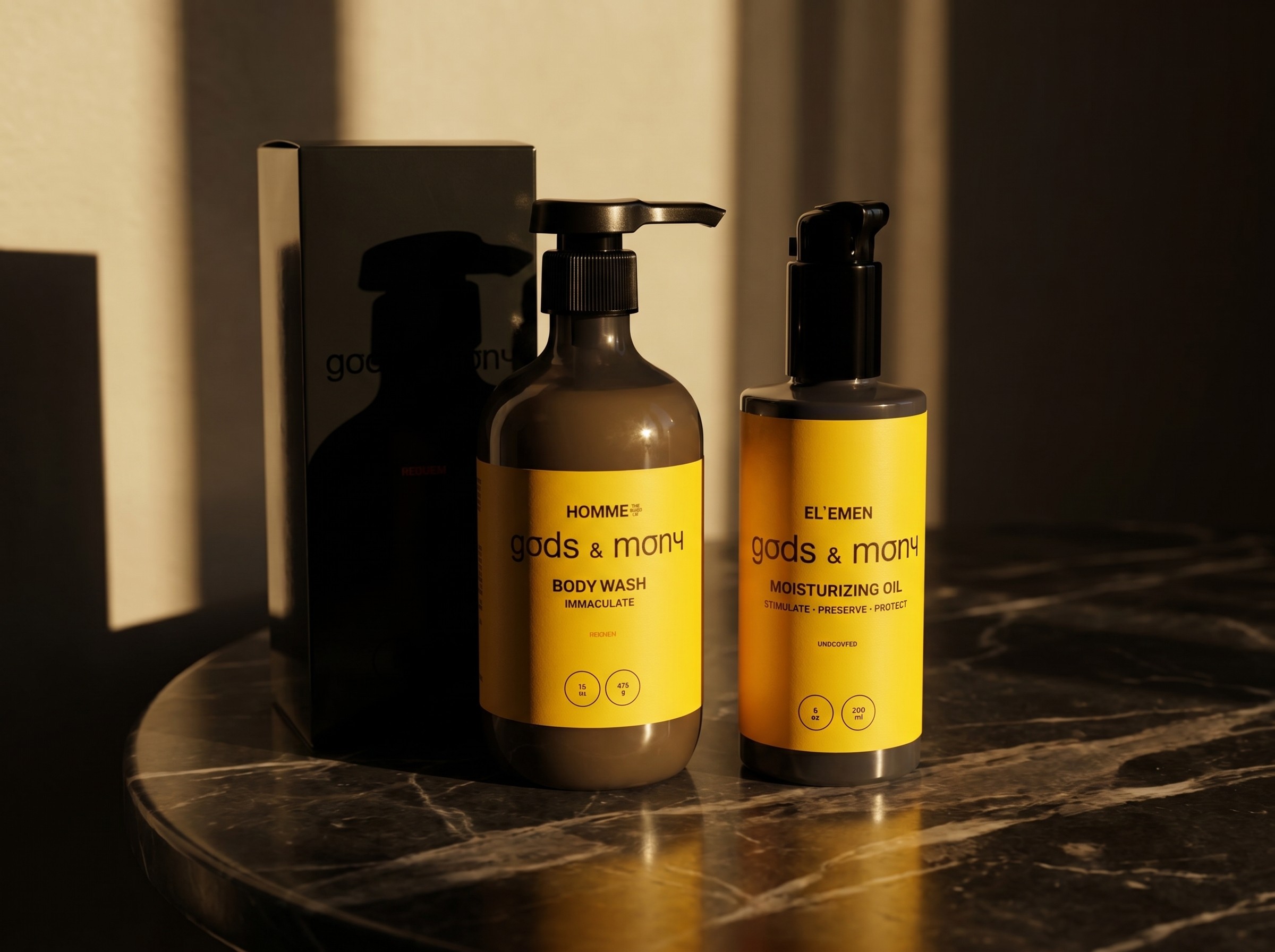
The wash, together. HOMME The Wash Up clears the day without stripping the skin raw, and it's built for him specifically, which matters when you're trying to get a man to actually keep a habit. Two faces, one sink, sixty seconds. The day comes off and the wind-down begins.
The reset, a couple of nights a week. EXFOLIARE Exfoliant clears the dull surface layer so skin looks alive instead of tired. Doing it on the same nights turns it into a small shared landmark in the week.
The hydration, every night. EL'EMEN Creme Hydration is the step that leaves skin recovered instead of depleted, and the EL'EMEN Moisturizing Oil seals it in on the rough days. This is where the touch comes in naturally, the moment of care that closes the night.
Organic, made in the USA, and short enough to survive a real evening. If you're not sure where to start, the skin quiz builds a simple set around actual skin, and the full skincare collection is designed around the same principle: short routines that hold up under real life. The point isn't the products. It's that the shelf gives two people a daily reason to stand together and take care of each other, instead of drifting to separate corners of the house.
How To Build It So It Actually Lasts
A couples self care routine only works if it survives past the first enthusiastic week. Most don't, and the reason is always the same: people expect it to feel automatic far too soon.
The science is clear that habits take longer to set than the internet promised you. A 2024 systematic review found new habits take a median of 59 to 66 days to become automatic, with some taking far longer, not the mythical 21 days (NCBI). So plan for roughly two months of showing up before the ritual stops requiring effort. The first few weeks will feel like a thing you're doing. Push through that window and it becomes a thing you are.
A few rules make it stick:
Anchor it to something you already do. The research shows habits form fastest when they're tied to an existing cue and a consistent context. Don't invent a new time slot. Bolt the ritual onto the brushing-teeth moment or the first coffee, where the trigger already exists.
Keep it embarrassingly small. Three minutes, not thirty. The couples who last picked something so easy that "we're too tired" was never a valid excuse. You can always do more on a good night. You should never need willpower on a bad one.
Let one of you be the anchor. Partner accountability is one of the strongest forces in habit science. On the nights one of you can't be bothered, the other carries it. That's the whole advantage of doing it as a pair, you've each got a built-in reason not to quit.
Protect it on the bad days. A missed night isn't failure, but quitting after a missed night is. The ritual proves itself precisely on the evenings you don't feel like it. Those are the days it's actually doing its job.
This is the same engine behind every durable practice, the unglamorous consistency we cover in self-care for men and the structure underneath a real men's wellness routine. Motivation starts a ritual. Only system keeps it. Build the system once, together, and the tired version of both of you can't renegotiate it later.
If You're The One Buying This For Him
A note for the partner reading this with a specific man in mind, because the way in matters.
The instinct is to treat it like a gift, wrap up some skincare, hand it over, hope he uses it. That works for a birthday. It rarely builds a ritual. A box of products handed across a table is a transaction. A man uses it twice and it migrates to the back of a drawer.
The thing that actually lands is an invitation, not a present. Not "here, fix your skin," but "let's do this together." You're not handing him a chore. You're offering a few minutes a day that belong to the two of you, with the care built in. That reframe is everything, it turns a product into a practice, and a practice into the kind of shared meaning the Harvard research showed is the whole point.
If you do want something to put in his hands to start it off, the cleanest on-ramp is a set you'll both actually use, like the bundles and gift cards, introduced as the start of a shared ritual rather than a hint about his pores. And if you want to understand the standard behind what you're bringing into your home, the story behind the brand explains why we build the way we do. Bring it in as something you do with him. That's the version that lasts.
FAQ
What is a couples self care routine?
It's a small, shared ritual two partners do together regularly to stay connected and care for each other, anything from a wind-down skincare routine at the sink to a morning coffee or evening walk. The key word is shared: Harvard research found the relationship benefit only appears when both partners treat the activity as a meaningful ritual, not just two people doing tasks in the same room. It's less about pampering and more about manufacturing daily moments of connection on purpose.
How do we start a self care routine as a couple with no time?
Start absurdly small and anchor it to something you already do. Don't carve out a new hour, take three minutes you're both already spending, like the time at the bathroom sink at night, and turn it into a shared ritual. A simple two-step skin routine together, a wash and hydration, is enough to begin. The goal isn't more time. It's more intention applied to time you already share.
Does doing self care together actually help a relationship?
Yes, and the research backs it. Couples who consistently turn toward each other's small bids for connection are dramatically more likely to stay together, 86% versus 33% in Gottman's long-term study. Shared rituals create those moments on a schedule, and affectionate touch built into a care routine measurably lowers stress and raises happiness. A daily shared ritual is one of the most reliable, low-effort ways to keep two busy people pointed at each other.
How long until a couples ritual becomes a habit?
Plan for roughly two months. A 2024 systematic review found new habits take a median of around 59 to 66 days to feel automatic, not the 21 days you've heard repeated. Most couples quit in the first two weeks because it still feels like effort. The trick is keeping the ritual small enough that you can't justify skipping it and letting each partner carry it on the other's off nights. Push through the install window once and it runs on its own.
What's a simple shared grooming routine for couples?
Keep it to a few steps you'll both actually repeat. At night, both wash to clear the day, exfoliate a couple of times a week to reset the skin, then hydrate to finish, with an oil on rough days. Standing at the same mirror builds in natural, expectation-free touch, which is exactly the kind of contact that gets squeezed out of long relationships. The skin quiz can match a set to your skin if you'd rather not guess.
The Drift Is A Choice. So Is The Closeness.
Nobody falls out of love in a day. They fall out of it in a thousand small moments where they could have turned toward each other and didn't.
You don't fight that with a grand gesture once a year. You fight it with a ritual so small and so ordinary that it survives the tired nights, the busy weeks, and the seasons when neither of you has much to give. A few minutes at the same sink. A hand on the back. The day washed off together and the night begun on purpose. None of it is dramatic. All of it compounds into two people who stayed close while everyone around them quietly drifted.
That's the whole secret, and it's almost insultingly simple. The couples who make it aren't luckier or more compatible. They just kept choosing each other in the small ways, on the ordinary days, long after the fireworks faded into something steadier and far more rare.
So build the ritual. Keep it on the nights you don't feel it, because those are the nights it counts. Let the rest of the world mistake busyness for closeness and screens for company. You'll be the two standing at the mirror, taking care of each other, still pointed in the same direction. The drift is a choice. So is the closeness. Choose it on purpose, one ordinary evening at a time.

Gods and Mony Editorial
Editorial Team
Next posts