Wellness isn't a routine you do. It's a life you build.
Men's Wellness Routine: How To Build A Life, Not A Checklist
16 min read
2026-06-17
In This Article
Key Takeaways
Wellness Stopped Being Optional, And The Numbers Prove It
The LA Standard: Wellness As A Lifestyle, Not A Phase
Build The Foundation Before You Build Anything Else: Sleep
Move Every Day, Because The Body Runs The Mind
Manage Stress On Purpose, Because It Shows On Your Face
Grooming: The Visible Layer Of An Invisible Discipline
Make It A System, Not A Sprint
FAQ
The Life That Maintains You
Men's Wellness Routine: How To Build A Life, Not A Checklist
Most men don't have a wellness routine. They have a wellness emergency.
It comes in waves. A bad checkup, a birthday with a heavier number, a photo they didn't like. So they panic-buy a gym membership, download three apps, swear off sugar on a Sunday night, and run hard for nine days. Then life pushes back, the motivation drains out, and they're right back where they started, telling themselves they'll get serious again in January.
That cycle isn't a discipline problem. It's a design problem. They keep treating wellness as a project with a finish line, something you sprint at and then complete. It isn't. There is no finish line. There's only the way you live, repeated, until the man you're trying to become is just the man you are.
A real men's wellness routine isn't a checklist you grind through and tick off. It's an operating system. A handful of rituals run so consistently they stop feeling like effort and start feeling like identity. The men who age well, lead well, and walk into a room already handled didn't find a hack. They built a life that maintains them by default.
This is how you build that life.
Key Takeaways
Wellness is now a structural shift, not a trend. The men's personal care market sits at $47 billion in 2025 and is projected to reach $64 billion by 2030 (Mordor Intelligence). Roughly 68% of men globally now use personal care products regularly. Taking care of yourself stopped being optional.
Sleep is the foundation, and most men are losing it. Only 42% of Americans get the sleep they need, down from 56% a decade ago (Gallup). Good sleepers show 30% greater skin-barrier recovery and roughly half the skin-aging score of poor sleepers (ScienceDaily).
Movement is medicine for the mind, not just the body. Just 30 minutes of moderate activity most days measurably reduces anxiety and depression (Caromont Health). The workout is half physical, half mental hygiene.
Stress surfaces on your skin. Elevated cortisol measurably degrades the skin barrier and deepens fine lines (Choe et al., Nature). Managing pressure is appearance maintenance with a different name.
Grooming is the visible layer of an invisible discipline. A short, repeatable skin ritual, a wash, an exfoliant, and hydration, is the part of your wellness routine the world actually reads first.
Wellness Stopped Being Optional, And The Numbers Prove It
Start by killing the old story, the one that says caring about your health and your appearance is somehow unmanly or self-indulgent.
The data buried that idea years ago. The global men's personal care market is valued at roughly $47 billion in 2025 and is forecast to climb to $64 billion by 2030, growing at a steady mid-single-digit clip year after year (Mordor Intelligence). Around 68% of men globally now use personal care products regularly, and search interest in "men's skincare routine" has exploded by 857% over five years. That is not a fad. That is a culture rewriting what it expects from a man.
The Global Wellness Institute has tracked the same shift from the wellness side: barbershops becoming hubs for emotional and physical health, men-only retreats and recovery workshops appearing worldwide, and a generation of men expanding self-care past the haircut into skincare, sleep, movement, and mental fitness. The men who used to keep all of this quiet now build it on purpose and talk about it openly.
Here's what that means for you. You are not being asked to invent something strange or step outside what a man is supposed to do. You're being invited to catch up to where the most put-together men already live. Wellness isn't the opposite of seriousness. For the modern high performer, it is the seriousness, applied to the one asset he can't replace.
The man who keeps treating his health as something he'll get to later is the outlier now. And not the kind anyone envies.
The LA Standard: Wellness As A Lifestyle, Not A Phase
Look at where this culture is most concentrated and you'll understand what a real routine is supposed to feel like.
Los Angeles turned wellness into a way of living long before the rest of the country caught on. The city is now a genuine hub for longevity science, anchored by the USC Longevity Institute, the UCLA Longevity Center, and clinical heavyweights like Cedars-Sinai, surrounded by a population that treats sleep tracking, recovery protocols, clean food, and daily movement as ordinary parts of the day (Runway Live). What used to be eccentric biohacking has, in the words of one 2026 report, "left the laboratory and entered the lifestyle."
Strip away the hype and the lesson is simple. In LA, wellness isn't a thing men do in a burst and then stop. It's a thing men are, expressed in a hundred small, unglamorous choices repeated daily. The morning walk in real sunlight. The protein before the phone. The recovery guarded like a meeting. The grooming ritual run without thinking. None of it is dramatic. All of it compounds.
That's the standard worth stealing, no matter where you live. Not the cold plunge influencers or the $300 supplements, the posture. The decision to stop chasing a transformation and start living like a man who's already maintaining himself. The same way quiet luxury is about earned, understated quality instead of loud flash, real wellness is about consistency instead of intensity. The man who lives it doesn't announce it. He just never stops.
You don't need LA. You need its instinct: build the routine into the life so deeply that skipping it feels stranger than doing it.
Build The Foundation Before You Build Anything Else: Sleep
If you only fix one thing this year, fix your sleep. Everything else in a men's wellness routine is built on top of it, and most men are trying to build on sand.
The numbers are brutal. Only 42% of Americans now say they get the sleep they need, down from 56% a decade ago (Gallup). Men who average less than six hours are far more likely to wrestle with irritability, anger, and stress, while the body genuinely needs seven to nine hours of quality rest to function, recover, and regulate mood (UCLA Health).
And it shows. Researchers at University Hospitals Case Medical Center found that good sleepers had 30% greater skin-barrier recovery after disruption and roughly half the intrinsic skin-aging score of poor sleepers (ScienceDaily). The under-slept man doesn't just feel worse. He looks older, recovers slower, and reads as more tired in the first second someone sees him. The face keeps the receipts on how you've been living.
The fix isn't a gadget. It's a guarded bedtime, a dark cool room, and a hard stop on the phone. Treat sleep as the recovery infrastructure that makes the gym, the work, and the grooming actually pay off. You cannot out-supplement exhaustion, and you cannot moisturize your way out of it either. Sleep is where the body does the repair you take credit for in the morning. Build the night first, and the day has something to work with.
Move Every Day, Because The Body Runs The Mind
The second pillar isn't about abs. It's about the fact that your body and your mind share the same wiring, and movement is the cleanest lever you have on both.
You don't need a brutal program. Research is consistent that just 30 minutes of moderate activity most days of the week meaningfully reduces anxiety and depression while boosting energy and focus (Caromont Health). The walk counts. The lift counts. The thing you'll actually do every day counts more than the perfect plan you'll abandon in two weeks.
This is where the mental side of wellness gets real for men, who are far more likely to "handle it" by ignoring it. Movement is one of the few outlets that works without requiring you to talk about anything. It burns off the cortisol, resets the nervous system, and gives the busy mind somewhere to put its restlessness. The training session is half physical maintenance and half emotional hygiene, and the men who keep their heads clear under pressure almost always have a body they move on purpose.
The trap is intensity. Men quit movement the same way they quit everything else in wellness, by going too hard too fast, hating it, and bailing. The man with a routine that lasts picked something sustainable and kept it boring. Daily beats heroic. If you're still fighting yourself every morning to get out the door, the mechanics of making it automatic live in our guide on how to build discipline. Motivation starts the habit. Only structure keeps it.
Manage Stress On Purpose, Because It Shows On Your Face
Here's the pillar most men skip entirely, and it's the one quietly aging them: stress.
This isn't soft talk, it's biochemistry. Under chronic stress your body floods with cortisol, and research published in Scientific Reports shows elevated cortisol measurably degrades your skin's barrier function (Choe et al., Nature). A 2025 clinical study went further, finding that even moderate ongoing stress impaired skin-barrier integrity and increased the severity of fine lines (Journal of Cosmetic Dermatology). Your stress doesn't stay in your head. It surfaces on your face, your sleep, and your gut.
So managing it isn't a luxury bolted onto a wellness routine. It's a core mechanic. That can be the daily walk, the few minutes of stillness before the chaos starts, the hard line you draw around the inputs that wind you up. It doesn't have to be meditation on a cushion. It has to be something deliberate that tells your own body the threat is handled.
This is where the stoic man has a real edge that goes deeper than mindset. The man who doesn't let every setback spike his system isn't only calmer to be around, he's protecting his sleep, his skin, and his long-term health from a slow chemical tax most men pay without noticing. Composure isn't a personality trait. It's a wellness practice with measurable returns. Handle the pressure on purpose, before a life you're not managing starts showing up uninvited.

Grooming: The Visible Layer Of An Invisible Discipline
Everything so far is internal. Sleep, movement, stress, the work nobody sees. Grooming is where that work becomes visible, and it's why a skin ritual belongs in any serious men's wellness routine rather than off in some separate "vanity" category.
Think of it as the surface readout of the system underneath. You can sleep well, train, and manage your stress, and a daily ritual is what lets the world actually read that you've got yourself handled. It's also the easiest pillar to keep, because it takes three minutes and the payoff stares back at you every morning. The key is the same as everything else: keep it short enough that you never have an excuse to skip it.
It starts with the wash. Not the bar soap that's been stripping your face raw since college. A real cleanse that clears the day without leaving your skin tight and angry. HOMME The Wash Up is built for exactly that, cold-pressed organic oils and no sulfates faking cleanliness by stripping away what your skin needs. You wash, you stay hydrated, you start the day with a face that already looks awake.
Twice a week, reset the surface. Dead skin and congestion are what make a rested man still look rough. EXFOLIARE Exfoliant clears that layer so everything else absorbs and the skin looks alive instead of dull. Not a rescue when things go wrong, a standard that keeps them from going wrong.
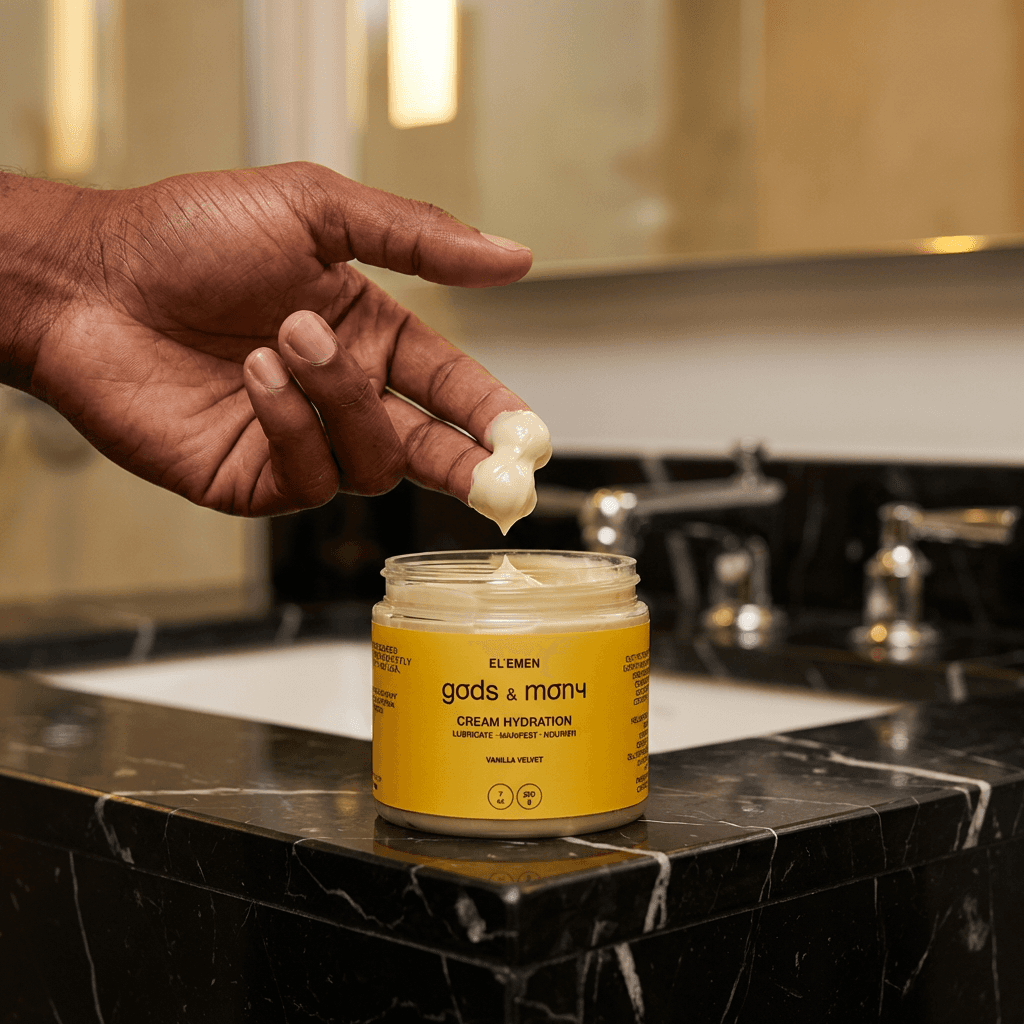
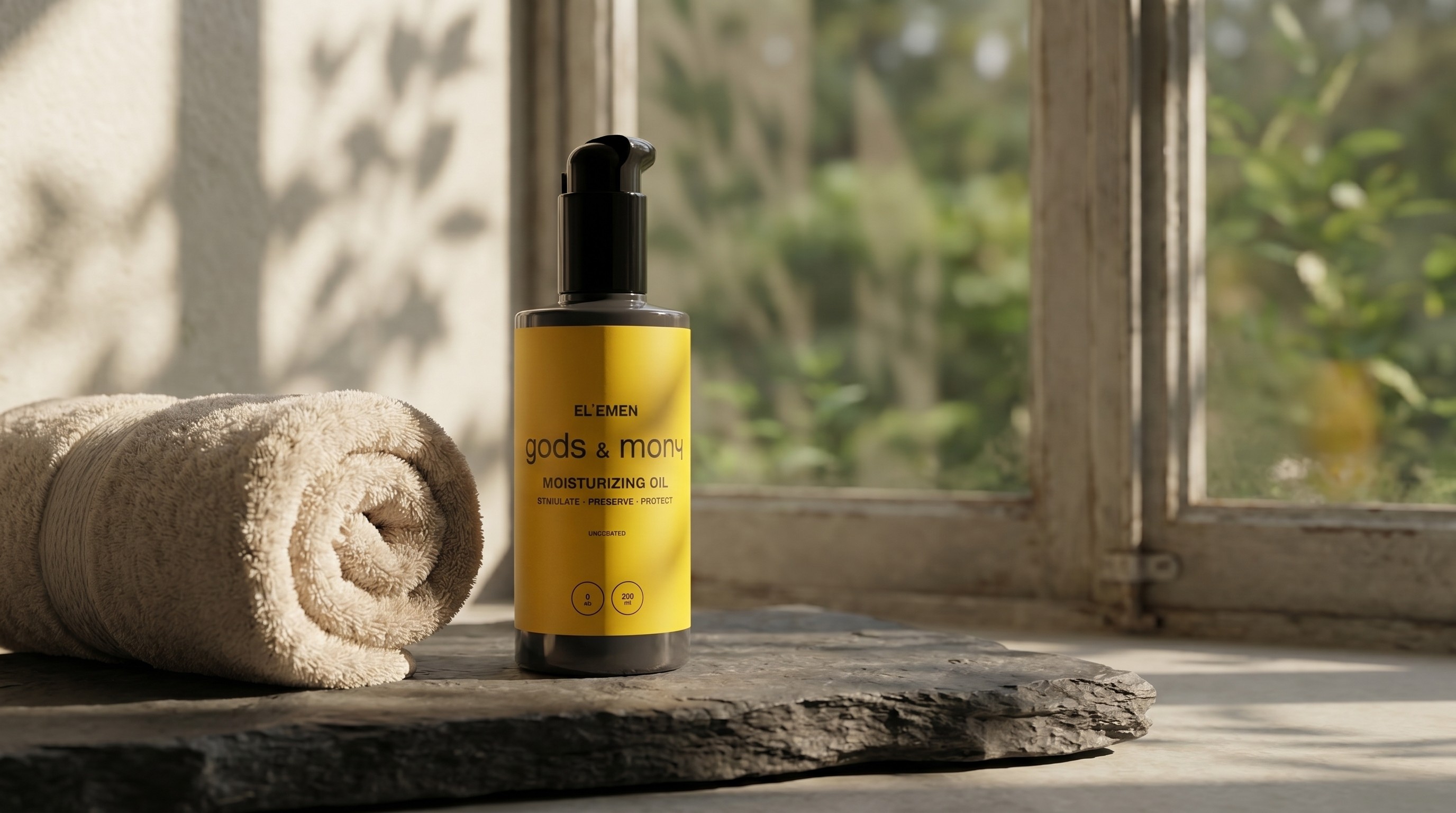
Then you hydrate, every day. EL'EMEN Creme Hydration is the step that keeps the face looking recovered instead of depleted, and on the days the climate or the travel beats you up, the EL'EMEN Moisturizing Oil seals it in. Four steps, organic, made in the USA, and lean enough to survive a real morning.
That's the whole grooming layer. A wash, an exfoliant a couple times a week, hydration, and an oil when you need it. If you'd rather not guess, the skin quiz matches a simple set to your actual skin, and the full skincare collection is built around the same idea: short routines that hold up. This isn't a separate hobby from your wellness. It's the part of it the room sees first. The skin on your scalp runs on the same logic, which is why a four-minute hair care routine belongs in the same shower.
Make It A System, Not A Sprint
The last move is the one that decides whether any of this lasts: stop running your wellness as a campaign and start running it as a default.
Men fail at wellness because they architect it to fail. They stack ten new habits on a Monday, demand perfection, miss a day, decide they've blown it, and quit. The man with a routine that actually holds did the opposite. He added one pillar at a time, let it become automatic before adding the next, and built in enough slack that a bad week didn't end the whole thing. He's not more disciplined than you. His system just doesn't depend on him feeling motivated.
That's the real difference between a checklist and a lifestyle. A checklist needs willpower every single day and breaks the first time you're tired. A system runs on autopilot, so the tired version of you can't renegotiate it. You don't decide to sleep, move, manage your stress, and wash your face. You just do, the way you brush your teeth. The deciding happened once, months ago, and got automated so it never has to happen again.
This is the same engine behind every other marker of a man who has it together, the logic that drives a real morning routine for success and the unglamorous consistency underneath genuine self-care for men. None of it is about intensity. All of it is about repetition until repetition becomes identity.
Build the system. Protect it on the days you don't feel it, because those are the only days that prove it's real. If you want to make this the standard for a man you care about, the bundles and gift cards are the cleanest way in, and the story behind the brand explains why we build the way we do.
FAQ
What does a good men's wellness routine actually include?
Four pillars, run consistently: sleep, movement, stress management, and grooming. Guard seven to nine hours of sleep, move for at least 30 minutes most days, build in something deliberate to manage stress, and keep a short daily skin ritual, a wash, exfoliation a couple times a week, and hydration. The research backs all four: good sleep nearly halves the skin-aging score, daily movement measurably lowers anxiety, and chronic stress visibly degrades your skin. You don't need ten habits. You need four you'll actually keep.
How do I start a wellness routine if I have no time?
Start with one pillar, not all four. Fix your sleep first, because everything else is built on it, then add a daily walk, then a three-minute skin ritual. Stacking everything at once is exactly why most men quit by week two. The goal is a system that runs without willpower, and you build that by letting one habit become automatic before adding the next. A small routine you keep for a year beats a perfect one you abandon by Thursday.
Is skincare really part of a men's wellness routine, or is it just vanity?
It's a core pillar, and the biology agrees. Your skin is a live readout of your sleep, stress, and hydration, all of which are wellness fundamentals. A short ritual, like HOMME The Wash Up, EXFOLIARE, and EL'EMEN hydration, is the visible layer of the invisible work you're doing internally. With the men's personal care market now worth tens of billions and growing, treating grooming as part of health rather than vanity is simply where the culture has landed.
How long before a wellness routine becomes a habit?
Plan for roughly two to three months of consistency before a new habit feels automatic, not the 21 days you've been promised. Most men quit inside the first two weeks because it doesn't feel rewarding yet. The trick is keeping each habit small enough that you can't justify skipping it, and pushing through that install window once. After that, the routine runs on autopilot and stops costing willpower. Our guide on how to build discipline covers the mechanics.
Why does stress affect my skin and energy so much?
Because chronic stress floods your body with cortisol, which research shows measurably weakens your skin barrier, deepens fine lines, and disrupts the sleep your body needs to recover. It's a feedback loop: stress wrecks your sleep, poor sleep raises your stress, and both show on your face and in your energy. That's why managing pressure deliberately, through movement, stillness, and protecting your recovery, isn't a soft add-on. It's one of the highest-return moves in any men's wellness routine.
The Life That Maintains You
Stop waiting for the version of yourself that finally has it all figured out. He's not coming as a transformation. He arrives as a routine.
You don't need a new year, a rock-bottom checkup, or a burst of motivation that fades by February. You need four pillars run quietly, every day, until they stop feeling like effort. Sleep that repairs you. Movement that clears your head. Stress you handle before it handles you. A grooming ritual that lets the world read what you've built. None of it is dramatic. All of it compounds into a man who walks in already handled.
That's the whole game. Not a perfect week you'll never repeat, but an ordinary one you can run forever. The men who age well and lead well didn't find a hack. They built a life that maintains them by default, and then they let it run.
So build the system, not the sprint. Keep it on the days you don't feel it, because those are the days it counts. Other men will keep waiting for the right moment to get serious. You'll already be living it. Wellness isn't a routine you do. It's a life you build, on purpose, one ordinary morning at a time.

Gods and Mony Editorial
Editorial Team
Next posts