Success has a look. It starts with the habits no one sees.
Grooming Habits Of Successful Men: The Discipline Behind The Presence
15 min read
June 15, 2026
Grooming Habits Of Successful Men: The Discipline Behind The Presence
Watch a successful man walk into a room and you'll tell yourself a story about luck.
Good genes. Good lighting. Born with it. It's the easiest lie to believe because it lets you off the hook. If he was handed something you weren't, then there's nothing for you to do but resent it.
Here's what's actually true. The man who commands the room did not win a genetic lottery. He built the way he shows up, brick by brick, on mornings nobody saw. The grooming habits of successful men are not about being handsome. They are about being handled. There is a difference, and the difference is everything.
Presence is not a gift. It's a discipline. And like every discipline, it leaves evidence. The clean jaw, the skin that looks rested, the quiet confidence of a man who took care of himself before he walked out the door. That evidence is what the room reads in the first second, long before you open your mouth.
This is what that discipline actually looks like.
Key Takeaways
The "good looks" advantage is real, but it's mostly grooming, not genetics. Attractive people earn roughly 20% more, and grooming explained the entire premium for women and about half for men (Wong & Penner, via UC Irvine). Effort is rewarded. You are not stuck with the face you woke up with.
The room decides fast. People form a complete judgment of trustworthiness and competence in 100 milliseconds (Willis & Todorov, Princeton). You don't get to introduce yourself first. Your presence speaks before you do.
High performers treat grooming as infrastructure, not indulgence. Gen-Z men now lead the shift, with 42% spending a larger share of income on grooming versus 29% of millennials (Barclays, 2025). The men who used to hide it now build it on purpose.
Recovery is a grooming habit. Good sleepers showed 30% greater skin-barrier recovery and roughly half the skin-aging score of poor sleepers (Univ. Hospitals Case Medical Center). The rested face is a built face.
A real habit takes a median of 66 days to lock in (Lally et al.). The successful man's routine isn't motivation. It's automation. He doesn't decide to take care of himself. He just does, the way he breathes.
Successful Men Don't Look Better By Accident
Start with the lie, because it's the one holding you back.
The lie says good-looking men have an unfair advantage you can't touch. And the first half is right. There is an advantage. Economists have measured it for decades, and the data is blunt: more attractive people earn meaningfully more over a career, get hired faster, and get read as more competent before they've proven a thing.
But here's the part the lie hides from you. When researchers actually broke down where that advantage comes from, most of it wasn't bone structure. It was grooming. In a study published in Research in Social Stratification and Mobility, sociologists found that being well-groomed explained the entire income premium attributed to attractiveness for women, and roughly half of it for men (Wong & Penner, via UC Irvine).
Read that twice. The thing you've been calling genetic luck is, in large part, a skill. A habit. A choice you've been refusing to make while telling yourself it wouldn't matter.
The successful man figured this out early. He stopped waiting to be handsome and started being handled. He doesn't have a better face than you. He has a better routine. The jaw is shaved clean because he shaved it clean. The skin is even because he maintains it. The whole effect that reads as "he just has it" is the residue of decisions he makes every single morning while other men hit snooze.
That's the good news buried in the data. The advantage isn't locked behind a gene you don't carry. It's sitting in a routine you haven't built yet. The same way a high value man is made and not born, the man who looks the part assembled himself on purpose.
The Room Decides In A Tenth Of A Second
You like to think people get to know you. They don't, not at first. They size you up.
Princeton researchers found that people form a full snap-judgment of a face, how trustworthy it is, how competent, how likeable, after an exposure of just 100 milliseconds. Giving people more time didn't change the verdict. It only made them more confident in the one they'd already reached in a tenth of a second (Willis & Todorov).
A tenth of a second. That's the entire window. Before you shake a hand, before you say your name, before you make your case, the room has already written its first draft of you.
The unsuccessful man hates this. He calls it shallow and goes back to being unprepared for it. The successful man accepts it as physics and gets dressed accordingly. He knows that walking in well-groomed isn't vanity, it's a head start. He hands the room a first impression worth confirming instead of one it has to overcome.
This is why grooming and presence are inseparable from real charisma. Charisma isn't a performance you turn on when the door opens. It's the confidence that comes from knowing you've handled the things you can control, so you walk in without the quiet static of self-doubt running in the background. The man who knows he looks sharp stops thinking about how he looks. That freedom is the magnetism everyone else is trying to fake.
You can't control the snap judgment. You can control what it's working with.
The Habit Is The Man
Here's where most men get it wrong. They think the successful man's grooming comes from feeling motivated. It doesn't. It comes from removing motivation from the equation entirely.
A habit takes a median of 66 days to become automatic, according to research from Lally and colleagues at University College London (European Journal of Social Psychology). That's the install window. And it's exactly where most men quit, because they were waiting for the routine to feel good and it never did, so they bailed around week two.
The successful man doesn't wait to feel like it. He built the ritual once, pushed through the install window, and now it runs without him. He doesn't decide to wash his face. He washes his face. It's not a choice anymore, the same way brushing his teeth isn't a choice. The decision was made years ago and automated so the tired version of him can't renegotiate it. If you're still fighting that fight every morning, the deeper mechanics are in our guide on how to build discipline.
And the culture has finally caught up to what these men always knew. Grooming used to be something a man did quietly and never mentioned. Now it's mainstream and unapologetic. The men driving that change hardest are the youngest and the most ambitious: 42% of Gen-Z men say they devote a larger share of their income to grooming, versus 29% of millennials, and a quarter of men now keep skincare in their daily routine (Barclays, 2025).
That's not softness. That's a generation of high performers realizing that the way you present yourself is a lever, and pulling it on purpose. The habit isn't separate from the man. The habit is the man. Show me what you do every morning when no one's watching and I'll show you who you actually are.
The Morning Set: What The Routine Actually Looks Like
Strip away the mystique and the successful man's grooming routine is short, deliberate, and ruthlessly consistent. It's not a ten-step ritual. It's a handful of moves done every day without negotiation. Here's the architecture. The same discipline runs upward, too: his hair care routine is as short and non-negotiable as the one for his face.
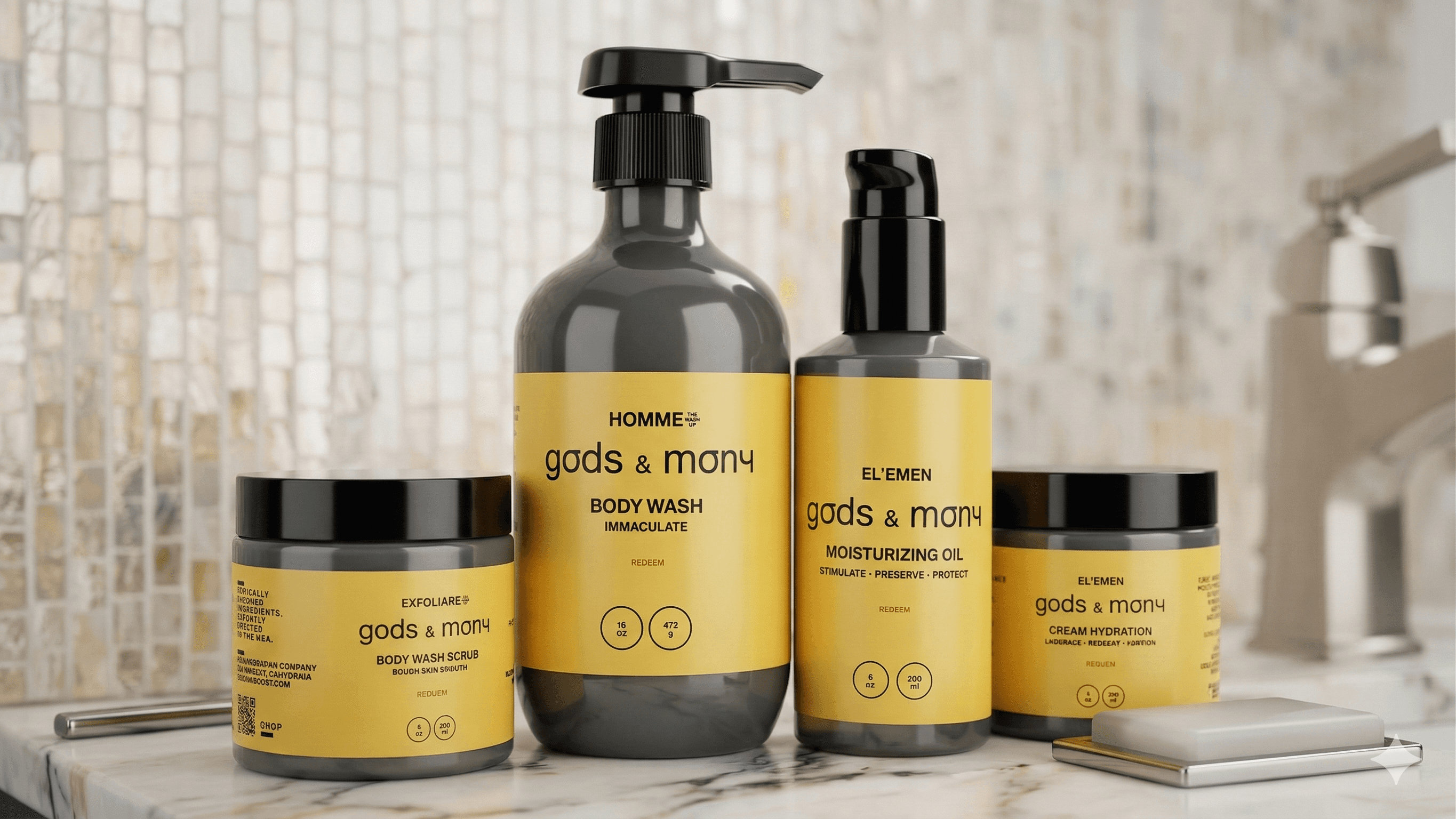
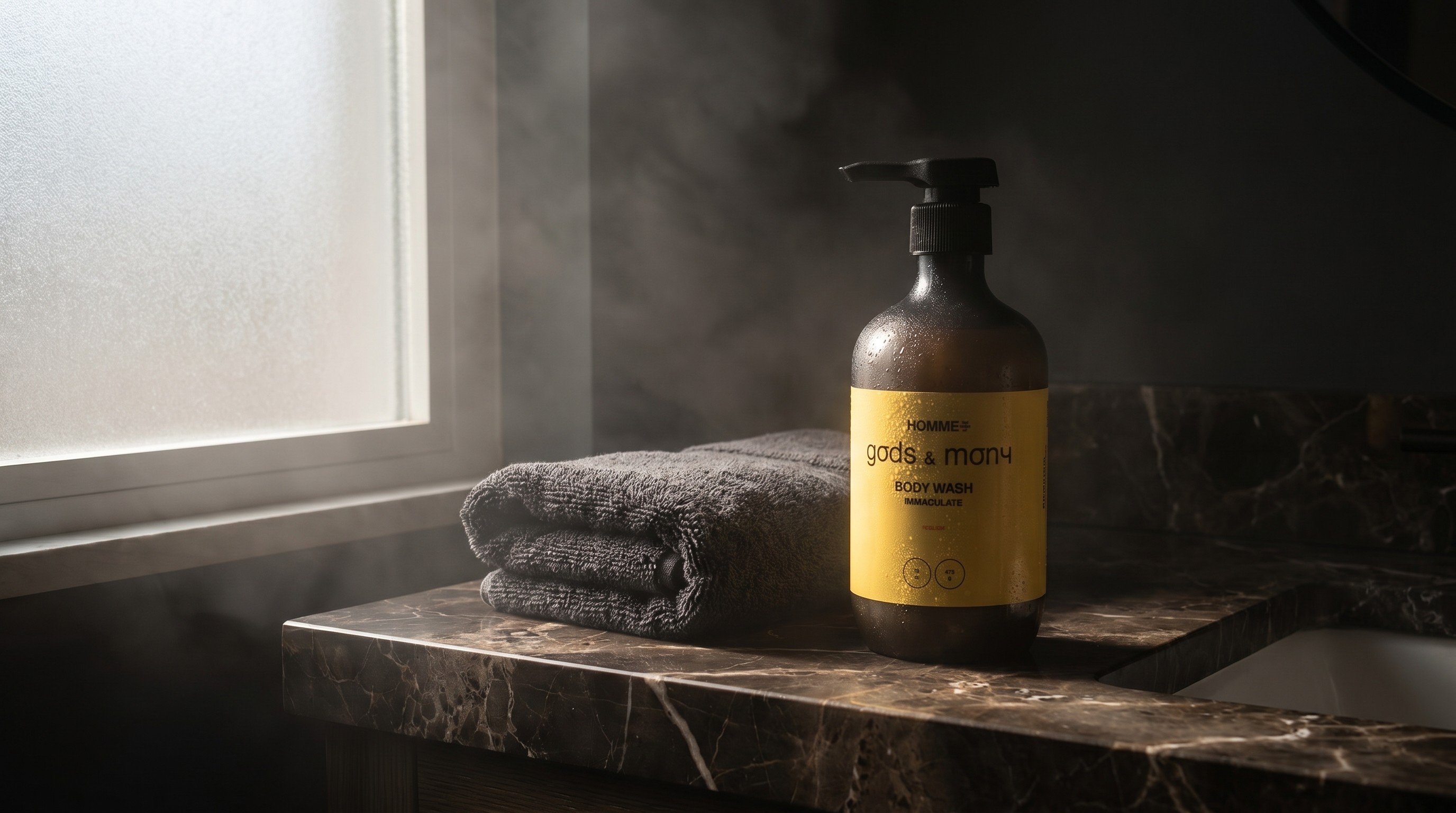
It starts with the wash. Not the bar soap that strips your face raw, the one that sat in the shower since college. A real cleanse that clears the day's grime without leaving your skin tight and angry. HOMME The Wash Up is built for exactly this: cold-pressed organic oils, no sulfates faking cleanliness by stripping your skin of everything including what it needs. You wash, you stay hydrated, and you start the day with a face that already looks awake.
Twice a week, he resets the surface. Dead skin, congestion, the dull layer that makes a tired man look ten years rougher than he is. EXFOLIARE Exfoliant clears it. Not as a fix when things go wrong, as a standard that keeps them from going wrong. The successful man maintains. He doesn't wait for a crisis to start caring.
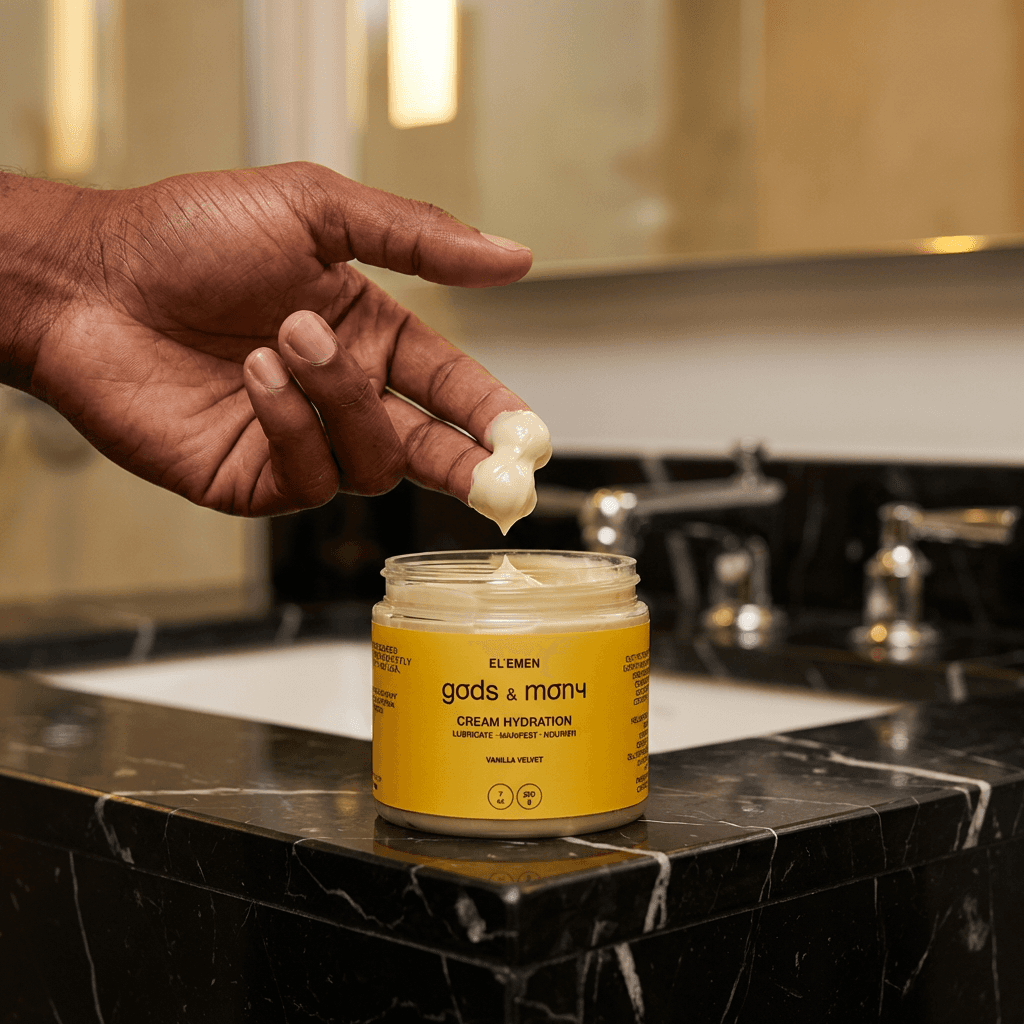
Then he fortifies. Hydration is the difference between skin that looks rested and skin that looks like it's been at war. EL'EMEN Creme Hydration is the layer between his face and a world built to dry it out, wind, recycled office air, sun, stress. He seals it with the EL'EMEN Moisturizing Oil, the finish for a man who follows through on what he starts.
That's the whole set. Three minutes in the morning, two extra mornings a week for the reset. The same three minutes whether he feels inspired or exhausted, because the routine doesn't ask his mood for permission. If you want it matched to your face instead of guessed at, take the skin quiz, or build the full set from the skincare collection.
The point isn't the products. The point is the consistency. A man who keeps a simple ritual every day beats a man who runs an elaborate one twice a month and quits. Boring and daily wins. It always has.

Recovery Is A Grooming Habit
Here's the habit nobody puts in the grooming guides, and it's the one that does the heaviest lifting: sleep.
You can run the best routine on earth and still look wrecked if you're sleeping five hours and calling it grinding. The science is clean on this. Researchers at University Hospitals Case Medical Center found that good sleepers showed 30% greater skin-barrier recovery after disruption and had roughly half the intrinsic skin-aging score of poor sleepers, 2.2 versus 4.4 (ScienceDaily). Poor sleepers also rated their own appearance lower. The face keeps the receipts on how you've been living.
And most men are losing this battle. Only 42% of Americans now say they get the sleep they need, down from 56% a decade ago, with most saying they'd feel better with more (Gallup). The man who's perpetually under-slept wears it on his face and then blames his genetics for the damage he's choosing every night.
The successful man treats sleep as part of his grooming, because it is. It's the recovery infrastructure that makes everything else work. He guards his bedtime the way he guards a meeting. He understands that the rested face isn't a lucky face, it's a built one, and you build it lying down. This is the same logic that runs a high performer's morning routine for success: the morning is only as good as the recovery that preceded it.
You cannot moisturize your way out of exhaustion. Sleep first. Then the routine has something to work with.
Stress Shows On Your Face, So Manage It Like A Grooming Habit
There's one more invisible input, and it's written all over the modern man whether he admits it or not: stress.
This isn't soft talk. It's biochemistry. When you're under chronic stress, your body floods with cortisol, and research published in Scientific Reports shows that elevated cortisol measurably degrades your skin's barrier function (Choe et al., Nature). A 2025 clinical study went further, finding that even moderate ongoing stress impaired skin barrier integrity and increased the severity of fine lines (Journal of Cosmetic Dermatology). Your stress doesn't stay in your head. It surfaces on your face.
The successful man knows that managing pressure isn't a wellness indulgence, it's appearance maintenance with a different name. The training session that burns off the cortisol. The cold rinse that resets the nervous system. The ritual of taking two minutes for himself that tells his own body the threat is handled. These aren't separate from grooming. They're upstream of it.
This is where the stoic man has a quiet edge. The man who doesn't let every setback spike his system isn't just calmer. He's protecting the very thing the room reads in that first tenth of a second. Composure is a skincare ingredient. Nobody markets it that way, but the biology doesn't lie.
So handle your stress on purpose. Move the body. Keep the ritual. Don't let a life you're not managing show up uninvited on your face.
The Market Caught Up To The Men Who Always Knew
If you still think grooming is vanity, the numbers have moved on without you.
The global men's grooming products market is now valued in the tens of billions and growing at a steady mid-single-digit clip year over year (Mordor Intelligence). That's not a fad spiking and fading. That's a structural shift in how men, especially ambitious ones, understand the relationship between how they present and how they perform.
The men who always took care of themselves used to do it quietly, almost apologetically. Now they don't have to. The culture finally caught up to what they understood instinctively: that grooming isn't the opposite of seriousness, it's a part of it. The same discipline that builds a career builds a face. The same standards that won't accept sloppy work won't accept a sloppy reflection.
This is the thread that ties grooming to every other marker of a put-together man, the way it connects to old money style and quiet, earned confidence. None of it is about flash. It's about the unmistakable signal of a man who has himself handled. Who decided that the details matter because he matters, and acted on it before anyone asked him to.
That's the whole game. Not looking rich. Looking like you respect yourself enough to show up as your best, every day, on purpose. If you want to make that the standard for a man you care about, the bundles and gift cards are the cleanest way in, and the story behind the brand explains why we build it the way we do.
FAQ
What are the most important grooming habits of successful men?
The non-negotiables are consistency over complexity. A daily cleanse with a wash that doesn't strip the skin, regular exfoliation a couple times a week to keep the surface clear, daily hydration to keep the face looking rested, and, the one most men skip, genuine recovery through sleep and stress management. The research backs this: grooming explains most of the so-called "attractiveness premium" in earnings, and good sleep nearly halves the skin-aging score versus poor sleep. It's not about a long routine. It's about a short one you actually keep.
Does grooming really affect how successful you are, or is that just marketing?
The evidence is real and it's not from grooming brands. Sociologists found that well-groomed people earn a measurable income premium, and that grooming, not raw genetics, explained the bulk of the "good looks" advantage. Princeton research shows people form a complete impression of your competence in 100 milliseconds. You're being read before you speak, and grooming is one of the few inputs to that read you fully control. That's not vanity. That's leverage.
How long does it take to build a grooming routine that sticks?
Around 66 days on average, based on University College London habit research, not the 21 days you've been promised. Most men quit in the first two weeks because the routine doesn't feel rewarding yet. The successful man pushes through that install window once, after which the routine runs on autopilot and stops requiring willpower at all. The trick isn't motivation, it's keeping the routine simple enough that you don't have an excuse to skip it. Build the habit, not the hype. Our guide on how to build discipline covers the mechanics.
Is a complicated, multi-step skincare routine necessary for men?
No, and the men who actually keep their skin handled tend to run lean. A wash, an exfoliant a couple times a week, a hydrator, and a finishing oil cover the vast majority of what a man needs. Complexity is where consistency goes to die. A four-step routine you do every day beats a ten-step routine you abandon by Thursday. If you'd rather not guess, the skin quiz matches a simple set to your actual skin.
Why do successful men prioritize self-care when they're so busy?
Because they understand it as an input to performance, not a reward for it. The rested face, the clear skin, the composure that comes from managing stress, all of it feeds how they're perceived and how they perform. They don't see three minutes of grooming as time taken away from the work. They see it as part of the work, the part that determines how the room receives them before the work even starts. Busy is exactly why they protect it.
The Man Behind The Grooming
Stop telling yourself the successful man got something you didn't.
He didn't. He built something you haven't. The clear skin, the clean presentation, the presence that walks in and settles a room, none of it was handed to him. He assembled it on mornings that felt like nothing, through an install window that felt like a waste, with a routine so simple it almost felt too small to matter. It mattered.
The room reads you in a tenth of a second. The data says grooming, not genetics, carries the advantage. The habit takes 66 days to lock in and a lifetime to pay off. Every one of those facts is an invitation, not a verdict. The face you show the world is one you get to build.
So build it. Keep the ritual on the mornings you don't feel it, because those are the only mornings that count. Sleep like recovery is part of the plan. Manage the stress before it manages your face. Be the man who's handled, quietly, every day, until being handled is just who you are.
Other men will keep waiting to feel handsome. You'll be too busy becoming the man who looks like he was always meant to be in the room. Presence isn't given. Build it anyway.

Gods and Mony Editorial
Editorial Team
Next posts